
.png)
Did you know simple lotions take months to perfect? Consumer demand for innovative beauty is booming.
Yet, creating flawless cosmetics remains a complex science. Formulators face constant hurdles with stability and preservation.
In this post, we discuss common challenges in cosmetic formulation and how expert ingredient partners solve them.
Understanding Core Cosmetic Formulation Challenges
As we noted earlier, creating flawless cosmetics is a complex science. Today’s beauty market moves incredibly fast. Brands want innovative, clean, and highly active products. This high demand creates unique technical hurdles. Modern cosmetic formulation challenges go beyond simple mixing. They involve managing unpredictable chemical reactions over a long shelf life.
Formulators must strike a delicate balance every single day. A successful product needs to look good, work well, and remain safe. Aesthetics mean controlling viscosity and texture. You want a lotion feeling luxurious. You definitely avoid formulas turning white and soapy on the skin. Efficacy requires strict pH control. Human skin sits around a pH of 4.7 to 5.7. Active ingredients like AHAs need a pH below 4.0 to actually work. Safety demands robust preservation. You must stop microbial growth without irritating sensitive skin.
The Formulation Balancing Act
Every successful product must balance three core pillars. If one fails, the entire formula fails.
| Pillar | Common Challenge | Key Metric or Target |
|---|---|---|
| Aesthetics | “Soaping effect” or runny textures | Viscosity (3,000–10,000 cP for lotions) |
| Efficacy | Active ingredient degradation | pH alignment (e.g., AHA requires pH < 4.0) |
| Safety | Microbial contamination | Water activity (aw) below 0.6 |
These strict requirements explain why both novices and veterans need skincare formulation troubleshooting. A cream often looks perfect in a small lab beaker. It can easily separate when moved to a large factory homogenizer. Emulsion instability catches even the best chemists off guard. Droplet merging and upward migration ruin textures. Unexpected pH drifting or color shifts in Vitamin C serums happen frequently.
Your base ingredient quality heavily dictates final product success. Subpar materials introduce hidden impurities. These impurities easily ruin fragile emulsions. Partnering with a reliable cosmetic raw materials supplier is absolutely crucial. For over 30 years, Jiangsu Holly Uwill International Trade Co., Ltd. has provided premium chemical ingredients. We manufacture natural preservatives, moisturizers, and flavor enhancers. Our state-of-the-art facilities hold strict ISO and FDA certifications. Using pure, tested ingredients minimizes unexpected reactions. It ensures your formulations remain stable from the lab straight to the consumer’s shelf.
Challenge 1: Emulsion Instability and Phase Separation
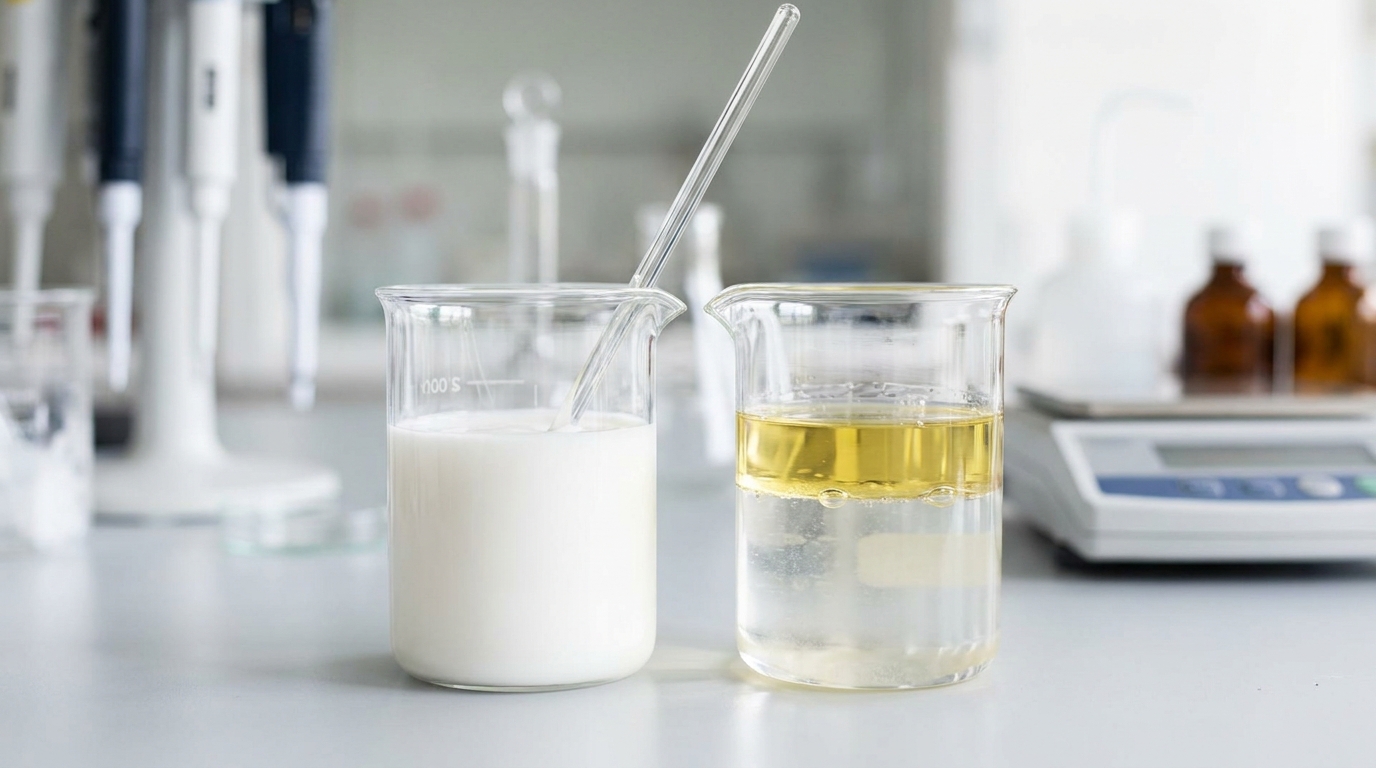
As we covered earlier, a cream might look flawless in a small lab beaker but separate unexpectedly during production. This brings us to one of the most frequent cosmetic formulation challenges: emulsion instability. Oil and water naturally repel each other. They constantly try to separate to reach their lowest energy state. Forcing them together requires skill, precise chemistry, and high-quality inputs.
You must identify the specific type of separation before fixing it. Instability usually shows up in distinct ways. Recognizing these early signs saves valuable time in the lab.
| Sign of Instability | What Happens | Visual Result |
|---|---|---|
| Creaming | Oil droplets migrate upward due to lower density. | A thick, concentrated layer forms at the top of the product. |
| Flocculation | Droplets clump together but do not fuse completely. | A cloudy, uneven texture or visible clusters appear. |
| Coalescence | Droplets merge completely into much larger drops. | Distinct pools of oil and water form, causing total separation. |
How to Solve Emulsion Instability
First, check your Hydrophilic-Lipophilic Balance (HLB). The HLB scale ranges from 1 to 20. It helps you match your oil phase perfectly. If you want a Water-in-Oil (W/O) emulsion, target an HLB of 3 to 6. For Oil-in-Water (O/W) lotions, use emulsifiers ranging from 8 to 18. A mismatched HLB almost guarantees phase separation over time.
Next, evaluate your rheology modifiers. Thickeners stabilize the water phase effectively. They create a physical structural network. This network blocks oil droplets from colliding and merging. Proper high-shear homogenization also ensures droplets remain small enough to stay suspended.
Finally, your raw materials dictate your long-term success. Inconsistent emulsifiers cause frustrating batch failures. You need a reliable cosmetic ingredients manufacturer to ensure pure, standardized materials. At Jiangsu Holly Uwill International Trade Co., Ltd., we bring over 30 years of expertise to your lab. Our ISO and FDA-certified facilities produce premium moisturizers and stabilizers. We also offer customized formulation development to help brands overcome tricky separation issues. Using ethically sourced, high-quality ingredients keeps your emulsions perfectly bound from day one.
Challenge 2: Preservation and Microbial Contamination
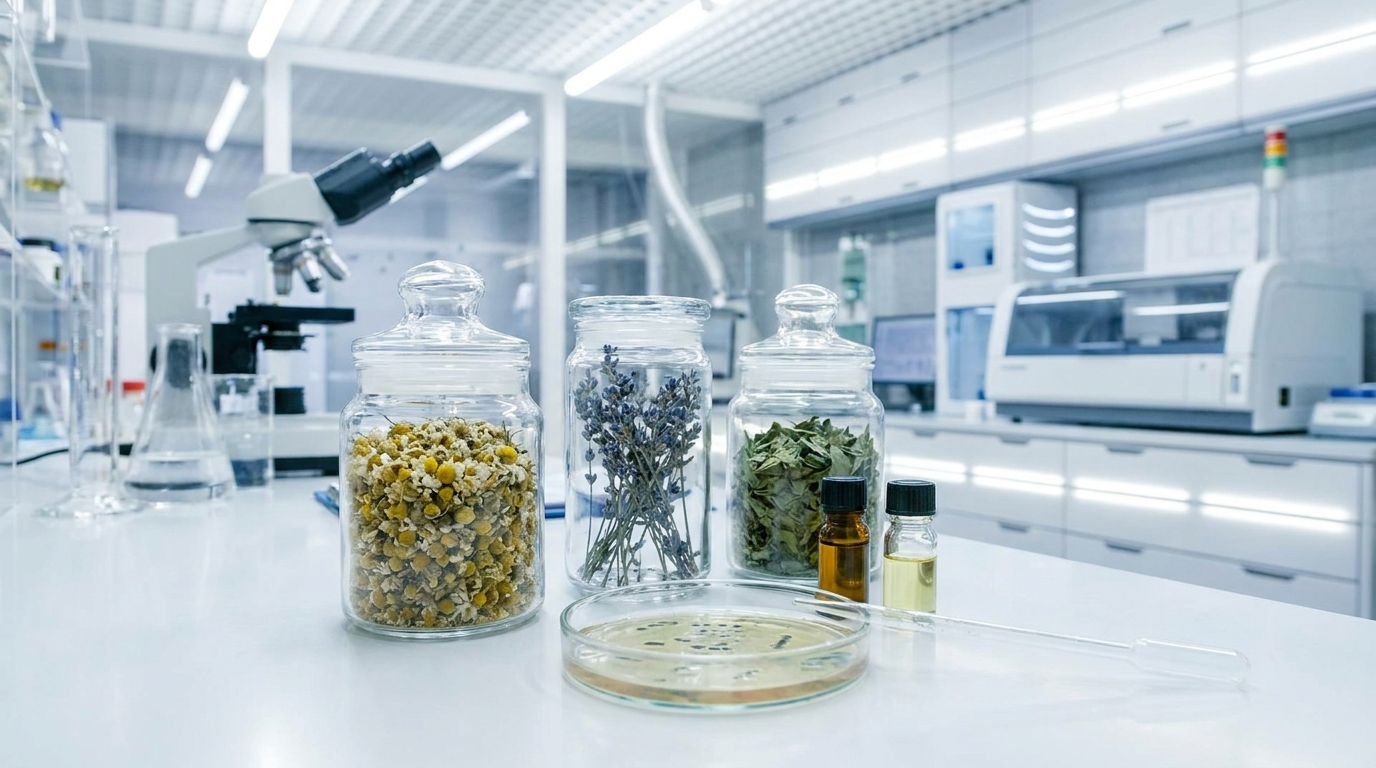
As we covered earlier, keeping oil and water perfectly bound requires precise chemistry. However, a physically stable emulsion still fails if it becomes a breeding ground for bacteria. This brings us to another major hurdle in cosmetic formulation challenges: microbial contamination. Water-based cosmetics naturally attract microbes. Bacteria, yeast, and mold thrive in these moist environments.
Historically, formulators used strong synthetic chemicals to stop this growth. Today, the massive consumer shift toward “clean beauty” makes traditional preservation incredibly difficult. Shoppers demand clean labels and organic alternatives. This trend forces chemists to find new ways to protect products without causing skin irritation.
How to Solve Preservation Failures
You cannot simply skip preservatives in water-based formulas. Instead, you must adopt smart, multi-layered defense strategies. Utilizing broad-spectrum natural preservatives helps maintain safety without irritating sensitive skin. You can also manipulate the formulation environment to make it hostile to microbes.
| Preservation Strategy | How It Works | Key Formulation Metric |
|---|---|---|
| Broad-Spectrum Blends | Targets both bacteria and fungi using natural or clean-compatible ingredients. | Typically used at 0.5% to 1.5% of total formula weight. |
| Chelating Agents | Destabilizes bacterial cell walls to boost primary preservative efficacy. | Add Disodium EDTA at 0.1% to 0.2%. |
| Water Activity Control | Reduces free water available for microbial growth. | Maintain a water activity (aw) below 0.6. |
Relying on guesswork is dangerous. You must implement rigorous Preservative Efficacy Testing (PET) during the R&D phase. This challenge testing deliberately introduces microbes into your sample. It proves whether your defense system actually works over a long shelf life. Heat-sensitive natural preservatives must also be added during the cool-down phase, typically when the emulsion drops below 40°C, to prevent degradation.
To balance shelf-life with ethical standards, you need effective cosmetic formulation solutions. Sourcing the right materials makes all the difference. Jiangsu Holly Uwill International Trade Co., Ltd. specializes in manufacturing high-quality natural preservatives. Our ingredients meet strict clean beauty standards without sacrificing safety. By choosing our FDA-certified wholesale cosmetic ingredients, brands easily secure skin-friendly preservation systems. We ensure your products stay fresh, sustainable, and entirely safe for everyday consumer use.
Challenge 3: Achieving the Perfect Texture and Sensory Experience
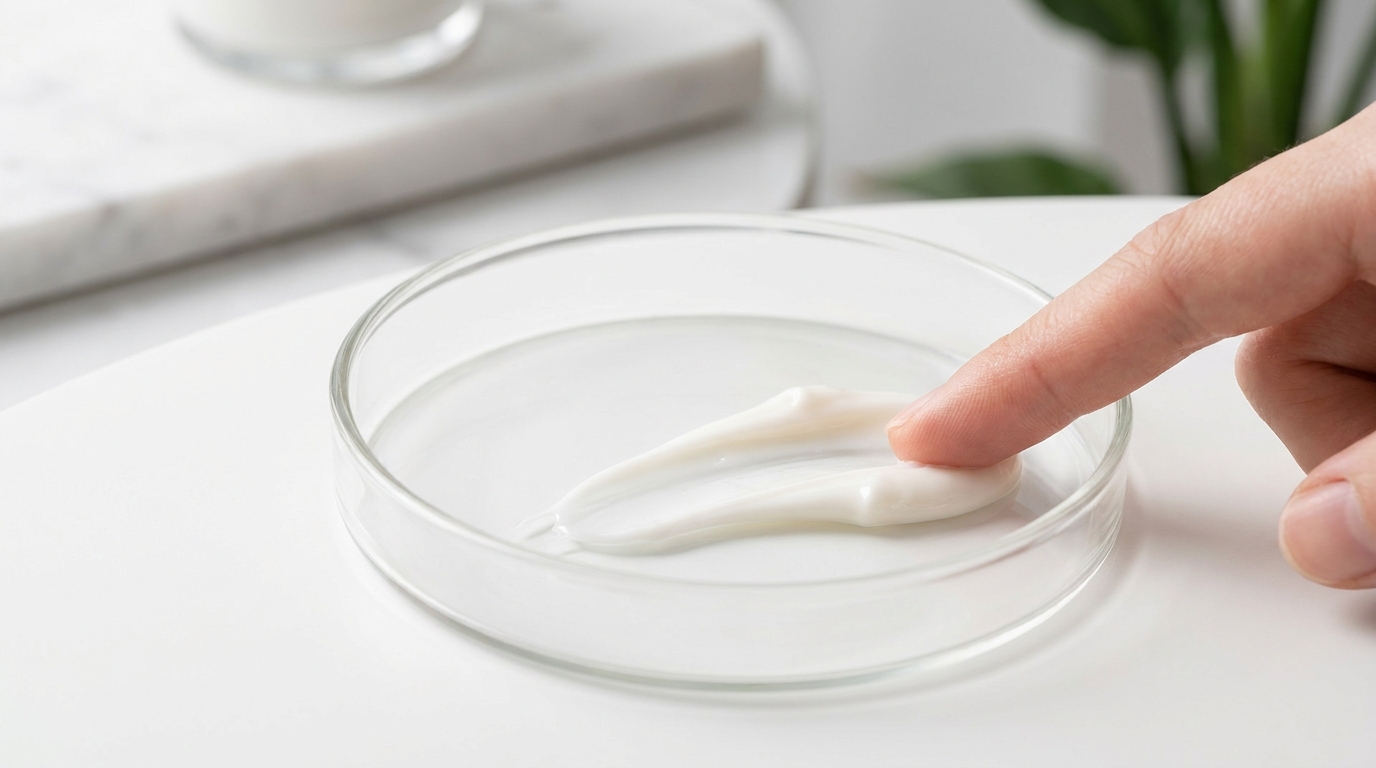
As we covered earlier, keeping your product safe from microbes is absolutely vital. However, a perfectly preserved and physically stable emulsion will still fail if consumers hate how it feels. This brings us to one of the most subjective cosmetic formulation challenges: achieving the perfect texture. Shoppers judge a product within seconds of applying it.
Formulators constantly battle common sensory issues. Stickiness makes serums feel cheap. Pilling occurs when polymers clump and roll off the skin. Greasiness happens when heavy oils fail to absorb quickly. You also face the dreaded “soaping effect.” This happens when high surface tension causes a lotion to turn white and streak during rub-out. Furthermore, maintaining consistent texture across different climates is incredibly difficult. A thick cream might feel luxurious in a dry winter. That same cream often feels heavy and suffocating in humid summer heat. Temperature shifts directly alter viscosity, changing how your product spreads on the skin.
How to Solve Sensory and Texture Issues
You fix sensory issues by carefully balancing your lipid profile and thickeners. Testing different emollients optimizes spreadability. If your lotion suffers from the soaping effect, adjust your oil phase. Replace a portion of high-molecular-weight waxes with ester oils. You can also use low surface tension ingredients like Dimethicone. This simple swap eliminates white streaking instantly.
Next, look at your rheology modifiers. Using a single thickener often causes stickiness or pilling. Instead, rely on thickener synergy. Combining Xanthan Gum with Magnesium Aluminum Silicate creates a superior structural network. It provides excellent suspension while keeping the skin feel light and elegant.
| Sensory Issue | Likely Cause | Formulation Solution |
|---|---|---|
| Soaping (White Streaking) | High surface tension or excessive solid waxes. | Introduce ester oils or Dimethicone. |
| Pilling (Clumping) | Too many high-molecular-weight polymers. | Reduce carbomer levels or blend with natural gums. |
| Greasiness | Improper lipid profile or slow-absorbing oils. | Balance heavy occlusives with fast-spreading emollients. |
Finally, your sensory baseline relies entirely on consistent raw materials. Varying ingredient qualities ruin batch-to-batch texture. Procuring standardized inputs guarantees your lotion feels exactly the same every time you make it. At Jiangsu Holly Uwill International Trade Co., Ltd., we eliminate this guesswork. We leverage over 30 years of experience to manufacture premium moisturizers, emollients, and flavor enhancers. Our ISO and FDA-certified facilities deliver pure, standardized ingredients. We help global personal care brands optimize the user experience. Partnering with us ensures your products feel luxurious, absorb perfectly, and maintain flawless consistency in any climate.
Challenge 4: Ingredient Incompatibility and Oxidation
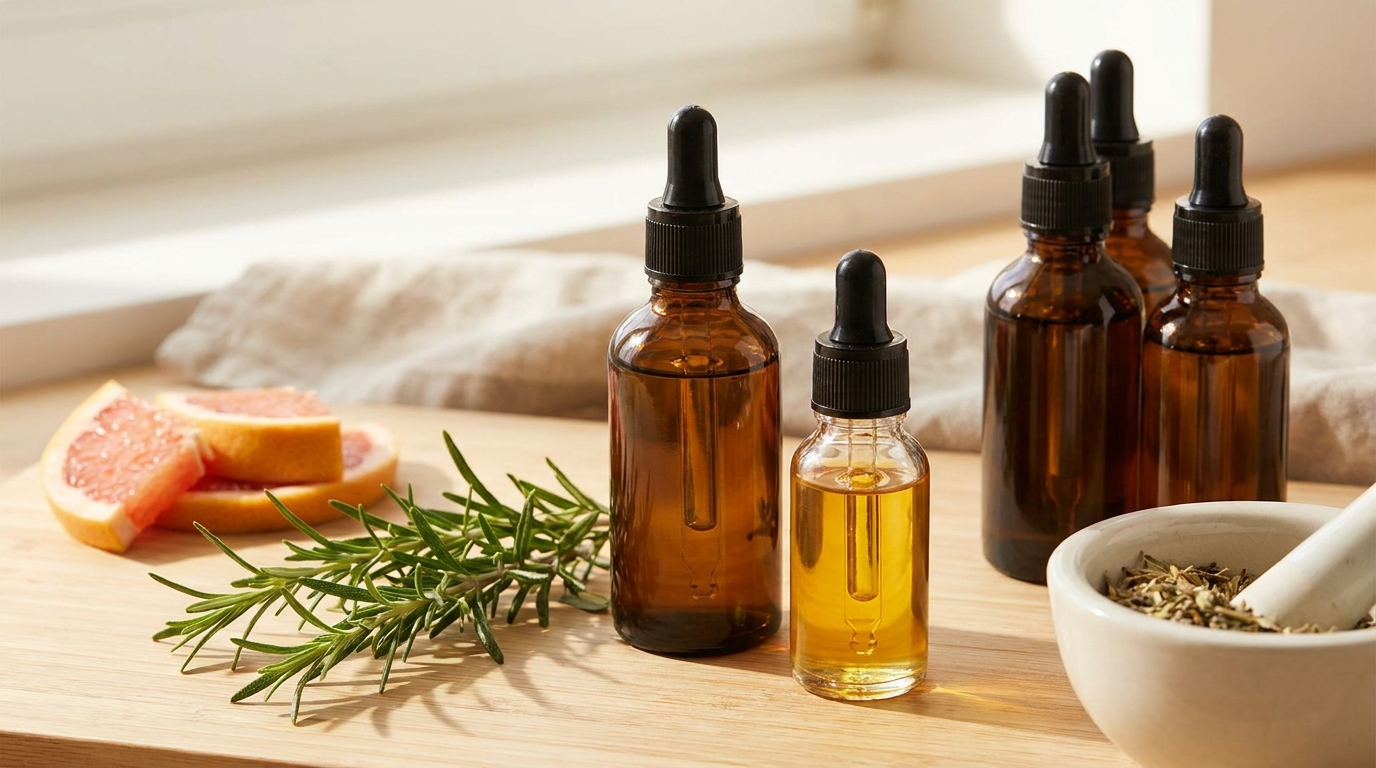
As we covered earlier, achieving the perfect texture and securing a robust preservation system are massive milestones. Yet, even a flawlessly textured, microbe-free lotion fails if its active ingredients degrade before reaching the consumer. This brings us to another critical hurdle when examining common challenges in cosmetic formulation and how to solve them: ingredient incompatibility and oxidation.
Today’s consumers want high-performance skincare. They demand formulas packed with sensitive actives like Vitamin C, Retinol, and exotic botanical extracts. Unfortunately, these powerful ingredients are notoriously fragile. Exposure to light, air, or even other ingredients causes rapid degradation. When active ingredients break down, you face unwanted chemical reactions. A clear Vitamin C serum might turn brown. Natural plant oils quickly go rancid, altering the product’s odor. Ultimately, the formulation loses its efficacy entirely.
Incompatibility also destroys physical stability. For example, mixing anionic (negatively charged) and cationic (positively charged) ingredients causes immediate disaster. If you combine a standard carbomer thickener with a incompatible surfactant, the structural network collapses. Your thick gel instantly turns into a cloudy, watery mess.
How to Solve Incompatibility and Oxidation
You must protect sensitive ingredients from the moment they enter the beaker. Smart formulation requires a multi-layered defense strategy to keep actives potent and stable.
First, consider encapsulation technology. Encapsulating fragile actives like Retinol shields them from oxygen and incompatible ingredients. They remain safely isolated within the formula until they melt into the skin upon application.
Second, you must build a robust antioxidant system. You need to protect both the oil phase and the water phase separately.
| Protection Target | Recommended Ingredient | How It Works |
|---|---|---|
| Oil Phase | Tocopherol (Vitamin E) | Prevents natural oils and butters from going rancid over time. |
| Water Phase / Actives | Sodium Metabisulfite or Ferulic Acid | Stops water-soluble actives like Ascorbic Acid from oxidizing and browning. |
| Trace Metals | Disodium EDTA (0.1–0.2%) | Binds to stray metal ions that trigger rapid oxidation in the formula. |
As we mentioned earlier, chelating agents like Disodium EDTA boost your preservatives. They also play a massive role here by preventing metal-induced oxidation. Trace metals often sneak into formulas through water or low-quality natural extracts.
Third, implement strict pH monitoring. Active ingredients only remain stable within specific pH windows. You must use reliable buffers, such as a Citric Acid and Sodium Citrate blend. Buffers lock the pH in place and prevent dangerous drifting over the product’s shelf life.
Finally, avoiding oxidation starts with pristine raw materials. Subpar ingredients often carry hidden impurities that trigger unwanted chemical reactions. You need a trusted partner to supply ultra-pure inputs. With over 30 years of experience, Jiangsu Holly Uwill International Trade Co., Ltd. provides premium, highly stable chemical ingredients. Our state-of-the-art facilities manufacture natural preservatives, moisturizers, and flavor enhancers under strict ISO and FDA certifications. By sourcing ethical, high-quality raw materials from us, you eliminate hidden trace metals and impurities. We help ensure your sensitive active ingredients remain potent, stable, and highly effective from production to the final drop.
Challenge 5: Scaling Up from Lab to Commercial Production
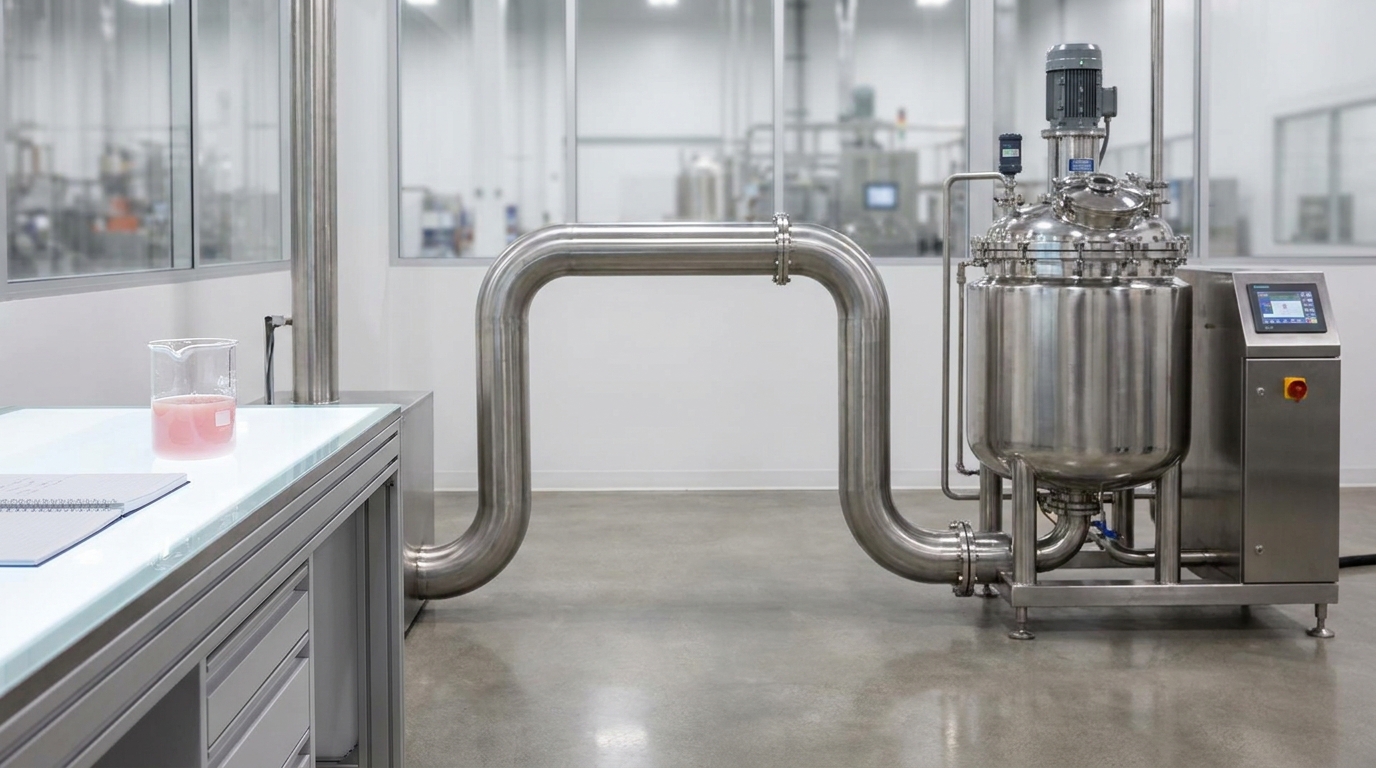
As we covered earlier, protecting sensitive active ingredients from oxidation is a massive hurdle. You carefully balance your emulsion, secure your preservation, and lock in the perfect pH. Your formula looks flawless in a 1-liter lab beaker. However, the true test awaits on the factory floor. This brings us to the ultimate hurdle regarding common challenges in cosmetic formulation and how to solve them: scaling up to commercial production.
Moving from a small beaker to a 1,000-liter manufacturing tank changes everything. Physics behave differently at scale. Unpredictable variables suddenly emerge. They easily threaten your hard work.
In the lab, you control temperatures rapidly. A small batch cools in minutes. A massive commercial tank takes hours to cool down. This slow cooling rate drastically alters how solid waxes crystallize. It often causes a dreaded scenario. Your lotion is beautifully thick in the lab but watery thin in the factory.
Mechanical shear forces also shift dramatically. Lab-scale overhead mixers apply different physical stress compared to industrial homogenizers. Excessive shear easily breaks fragile polymer networks. Insufficient shear leaves oil droplets too large. This triggers the phase separation we discussed in earlier sections.
How to Solve Scale-Up Issues
You solve scaling issues through strict discipline and gradual progression. Never jump directly from a lab sample to mass production. Expert formulators rely on a strict 10x scale-up rule. You increase batch sizes by no more than ten times per iteration. This gradual approach helps you monitor shear and heating consistency safely.
| Production Stage | Typical Batch Size | Primary Goal |
|---|---|---|
| Lab Bench | 1 Liter | Finalize ingredient ratios, pH, and initial stability. |
| Pilot Batch | 10 to 100 Liters | Test cooling rates, homogenizer shear, and batch consistency. |
| Commercial Run | 1,000+ Liters | Execute mass production using standardized operating procedures. |
Conducting thorough pilot batch testing before full-scale manufacturing is absolutely mandatory. It reveals hidden mechanical issues before they ruin thousands of dollars in raw materials. You adjust mixing speeds and cooling jackets during this critical phase.
Finally, successful scaling requires highly consistent raw materials and compliant manufacturing environments. Inconsistent inputs cause unpredictable reactions in large tanks. Partnering with an expert facility eliminates these risks. Jiangsu Holly Uwill International Trade Co., Ltd. brings over 30 years of industry experience to your production line. We manufacture premium chemical ingredients under strict ISO and FDA certifications. Our state-of-the-art facilities ensure your raw materials remain standardized, ethical, and pure. Relying on our proven expertise guarantees your commercial batches match your lab samples perfectly every single time.
Overcoming Hurdles with Customized Formulation Development
As we covered earlier, scaling up from a small lab beaker to a massive commercial tank introduces unpredictable variables. You must carefully manage cooling rates and mechanical shear. These steps prevent phase separation during mass production. However, even perfect scaling processes cannot fix a fundamentally flawed base recipe. This reality explains why off-the-shelf formulas often fail to meet unique brand requirements.
Generic recipes usually lack the precise chemistry needed for modern skincare. They use standard emulsifiers and basic lipid profiles. These standard bases struggle to accommodate sensitive active ingredients. If you add a low-pH AHA or a fragile botanical extract to a generic base, you risk immediate incompatibility. The structural network easily collapses. You then face the exact emulsion instability and oxidation issues we discussed in previous sections.
The Strategic Advantage of Custom Solutions
Global personal care brands need a distinct competitive edge. Customized formulation development provides this exact advantage. Building a recipe from scratch allows you to control every single variable. You can tailor the viscosity for specific humid climates. You can target a precise water activity level below 0.6 to boost self-preservation. This bespoke approach proactively addresses common challenges in cosmetic formulation and how to solve them right at the blueprint stage.
| Formulation Approach | 柔軟性 | Risk of Incompatibility | Best Use Case |
|---|---|---|---|
| Off-the-Shelf Bases | Very low. Cannot easily accept complex active ingredients. | High. Adding custom actives often breaks the emulsion. | Basic, low-cost commodity products. |
| Customized Formulation | Extremely high. Tailored HLB systems and specific pH buffers. | Low. Chemists design the base specifically for the chosen actives. | Premium, high-performance skincare brands. |
Partnering for Formulation Success
Executing a custom strategy requires a highly capable manufacturing partner. You need pure, reliable inputs to bring your unique vision to life. For over 30 years, Jiangsu Holly Uwill International Trade Co., Ltd. has led the industry. We provide high-quality chemical ingredients for global cosmetic brands. We specialize in manufacturing natural preservatives, moisturizers, and essential raw materials.
Our team understands the delicate balancing act of aesthetics, efficacy, and safety. We deliver sustainable, ethical, and tailor-made solutions for your specific product needs. Our state-of-the-art facilities operate under strict ISO and FDA certifications. We guarantee pure, standardized inputs for every single batch. Partnering with us ensures your custom formulas remain stable, safe, and incredibly effective from the lab directly to the consumer.
Conclusion
Formulating perfect cosmetics requires strict scientific precision.
You can overcome complex stability challenges using expert formulation solutions. Partner with Jiangsu Holly Uwill to guarantee a successful, market-ready product. Follow these actionable steps to improve your brand today:
- Review your emulsions for any signs of phase separation.
- Source high-quality natural preservatives for your next skincare batch.
- Contact our experts to develop a customized formulation strategy.
Frequently Asked Questions About Common Challenges in Cosmetic Formulation
Why is my cosmetic cream separating after a few weeks?
Phase separation often happens due to an incorrect HLB match. You must choose the right emulsifier for your oil phase. Sometimes, your mixing process lacks enough shear force. Always run accelerated stability tests at 40°C for 12 weeks. This simulates one full year of shelf life. Proper testing helps you catch emulsion instability early.
How do I stop my lotion from turning white when rubbed in?
This whitening issue is known as the soaping effect. It usually occurs because of high surface tension. Certain emulsifiers and high-molecular-weight waxes can cause this problem. You can fix this by replacing some waxes with Dimethicone. Using specific ester oils also helps reduce white streaking. These ingredients lower surface tension for a smooth application.
How can I naturally preserve my water-based cosmetic formulas?
Preserving natural formulas requires careful pH management and quality ingredients. Organic acids work best when the pH remains strictly controlled. Jiangsu Holly Uwill provides excellent natural preservatives for cosmetics. We have over 30 years of experience creating safe ingredients. Our ISO and FDA certified solutions ensure true product safety. Adding chelating agents can also boost your preservative efficacy.
Why did my clear cosmetic gel turn cloudy?
Cloudiness in gels usually points to poor ingredient solubilization. Sometimes, essential oils or fragrances are not fully dissolved. Electrolyte interference with your thickeners can also cause cloudiness. Always hydrate your water-phase thickeners fully before adding oils. This prevents fish eyes and keeps your gel perfectly clear. Using the right solubilizer is crucial for transparent formulas.
Why is my product thick in the lab but thin in the factory?
Scaling up from lab to factory changes cooling rates. Industrial homogenizers apply different shear forces than lab mixers. This difference can drastically alter your final product viscosity. A good rule is to increase batch sizes by 10x. Gradual scaling helps maintain consistent heating and shear forces. Always adjust your cool-down phase carefully during large production runs.
Here are steps to improve your cosmetic manufacturing process.
- Review your formula’s HLB values to ensure emulsion stability.
- Test your product pH to match human skin benchmarks.
- Source certified natural preservatives from trusted suppliers like us.
- Increase your production batch sizes gradually to control viscosity.
 Japanese
  English
  Russian
  Spanish
  Korean
  Arabic