
Skin collagen drops by 1% yearly. This decline fuels massive global demand for highly effective anti-aging cosmetics.
Choosing the right ingredients makes or breaks your formulation.
In this post, you will learn about biological aging mechanisms and balancing product safety.
We also explore finding reliable raw materials suppliers.
Understanding the Skin Aging Process
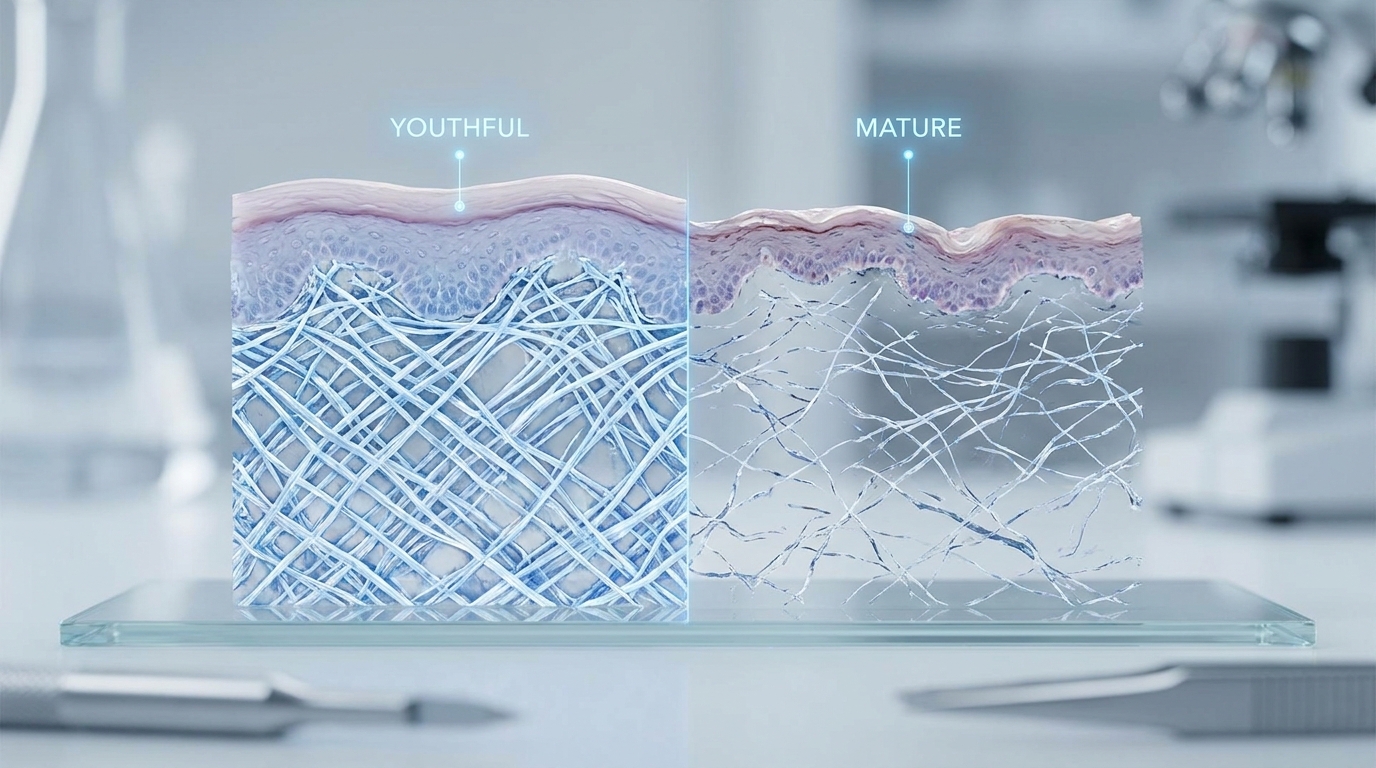
As we noted earlier, understanding biological aging mechanisms is crucial before finalizing your formula. You cannot repair what you do not fully comprehend. Let us break down exactly how skin degrades over time.
Intrinsic vs. Extrinsic Aging
Skin aging falls into two distinct categories. Intrinsic aging happens naturally as we get older. Our cellular turnover simply slows down over time. Extrinsic aging comes from outside forces. Sun exposure, daily pollution, and lifestyle choices drive this aggressive process.
Harmful UV rays cause severe photoaging. Meanwhile, chronic low-grade inflammation leads to a condition known as “inflammaging.” Extrinsic environmental factors actually cause the vast majority of visible aging signs.
| Aging Type | Primary Causes | Visible Skin Effects |
|---|---|---|
| Intrinsic (Chronological) | Genetics, cellular slowdown, time | Thinning skin, fine lines, hollow appearance |
| Extrinsic (Environmental) | UV radiation, pollution, smoking | Deep wrinkles, age spots, rough texture |
Key Structural Changes in Mature Skin
Your skin relies on a strong Extracellular Matrix (ECM). This matrix contains collagen, elastin, and moisture-binding molecules. Starting in our early 20s, skin collagen content drops by roughly 1% every year. Cellular fibroblasts begin to produce significantly less collagen. Existing elastin fibers also lose their snap.
Moisture loss presents another major formulation hurdle. The natural skin barrier weakens as we age. This decline leads to increased Transepidermal Water Loss (TEWL). Lacking enough natural lipids and humectants, mature skin becomes chronically dry and fragile.
The Threat of Oxidative Stress
Pollution and UV rays trigger Reactive Oxygen Species (ROS). These free radicals act like tiny wrecking balls inside the skin. They activate destructive enzymes called Matrix Metalloproteinases (MMPs). These specific enzymes break down healthy collagen and elastin structures.
This ongoing oxidative stress accelerates visible damage. It causes fine lines, deep rhytids, and stubborn hyperpigmentation. Neutralizing these free radicals requires powerful, highly stable antioxidants in your formula.
Strategic Ingredient Defense
This biological decline highlights why precise ingredient selection for anti-aging formulations matters so much. You must target specific cellular functions directly. Formulators need humectants to stop TEWL and peptides to signal new collagen production.
Sourcing high-quality components serves as your first line of defense. Working alongside an experienced skincare raw materials supplier makes a massive difference in product efficacy. For over 30 years, Jiangsu Holly Uwill International Trade Co., Ltd. has provided premium chemical ingredients. We manufacture sustainable moisturizers, natural preservatives, and other essential anti aging cosmetic raw materials. Our ISO and FDA certifications ensure your final product effectively repairs and protects mature skin.
Essential Categories of Anti Aging Cosmetic Raw Materials
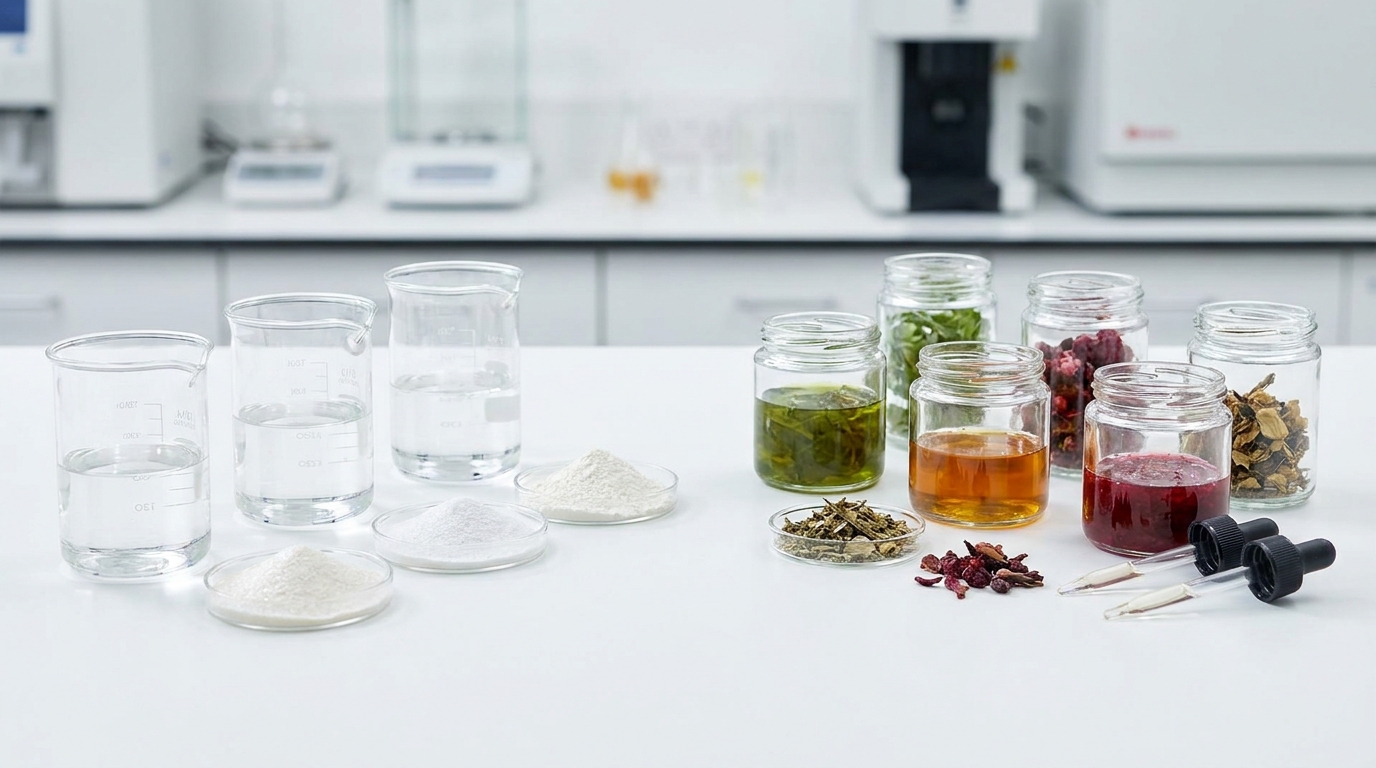
Building a strong defense requires selecting the exact right compounds. Formulators group these tools into four main categories. Each targets specific signs of mature skin. Let us explore these groups to guide your ingredient selection for anti-aging formulations.
Antioxidants for Environmental Defense
As we covered earlier, oxidative stress destroys healthy skin structures. Antioxidants neutralize these harmful free radicals. They prevent environmental damage and brighten the complexion. Vitamin C remains a gold standard here.
L-Ascorbic Acid works best at concentrations between 10% and 20%. It needs a formulation pH below 3.5 for proper skin penetration. Because pure Vitamin C is highly unstable, many formulators use derivatives. Magnesium Ascorbyl Phosphate offers a longer shelf-life and suits sensitive skin perfectly. Combining Vitamin C, Vitamin E, and Ferulic Acid actually doubles photoprotection.
Cell-Communicating Ingredients
These powerful actives tell skin cells to behave younger. They stimulate fibroblasts to produce fresh collagen. Retinoids lead this important category of ingredients. Over-the-counter retinol typically ranges from 0.1% to 1.0%. It accelerates cellular turnover rapidly across the epidermis. However, it often causes initial redness. Bakuchiol serves as a fantastic, non-irritating plant-based alternative.
Peptides also fall into this group. Signal peptides boost collagen production directly. Carrier peptides deliver vital trace elements deep into tissue. Sourcing premium cosmetic active ingredients guarantees these delicate signals reach their cellular targets intact.
Skin-Replenishing Ingredients
Mature skin struggles to hold natural moisture. Skin-replenishing ingredients fix this broken barrier. They lock in hydration and smooth rough textures. Hyaluronic Acid (HA) acts as a powerful humectant. It holds 1,000 times its weight in water. Low molecular weight HA penetrates deeply, while high molecular weight HA forms a protective surface film.
Ceramides are equally vital for barrier restoration. Optimal repair formulations often use a 3:1:1 molar ratio. This combines ceramides, cholesterol, and fatty acids perfectly. At Jiangsu Holly Uwill International Trade Co., Ltd., we manufacture highly effective moisturizers. Our ISO and FDA-certified facilities deliver sustainable, customized solutions to keep skin hydrated.
Exfoliants and Acids
Chemical exfoliants dissolve the bonds between dead skin cells. This process reveals brighter tissue underneath. It also allows your other actives to penetrate much deeper. Finding a trusted supplier for natural organic acids wholesale helps you maintain strict pH controls in your final product.
| Acid Type | Ideal pH Range | Standard Concentration | Primary Benefit |
|---|---|---|---|
| Glycolic Acid (AHA) | 3.0 – 4.0 | 5% – 10% | Deep exfoliation, collagen stimulation |
| Lactic Acid (AHA) | 3.5 – 4.0 | 5% – 12% | Gentle exfoliation, added hydration |
| Gluconolactone (PHA) | 3.0 – 4.0 | 2% – 10% | Surface exfoliation for sensitive skin |
Spotlight on Premium Cosmetic Active Ingredients
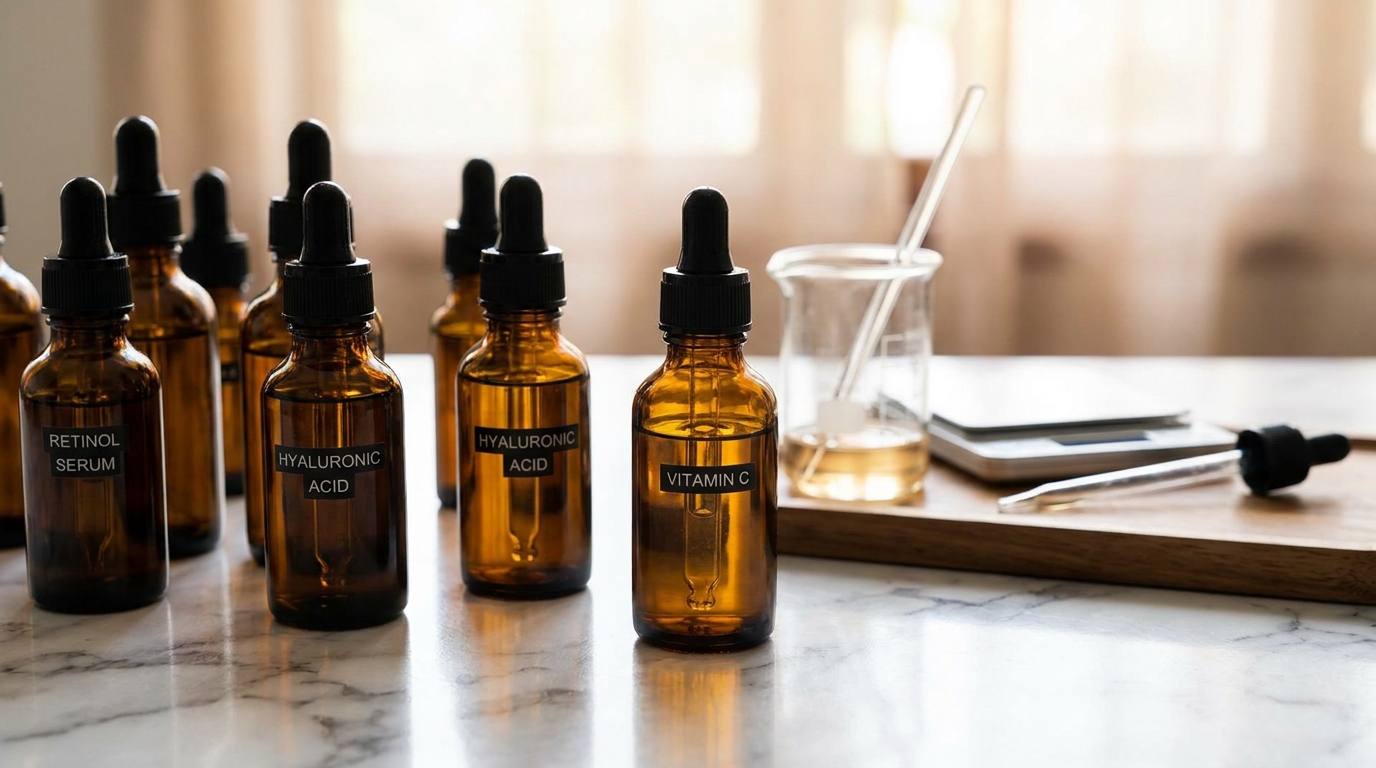
Once chemical exfoliants clear away dead cells and balance skin pH, your formula needs powerful actives to do the heavy lifting. Proper ingredient selection for anti-aging formulations ultimately relies on these premium components. They target wrinkles, dullness, and barrier damage directly. Let us dive into the most effective options for your next product line.
Retinoids (Retinol & Derivatives)
Retinoids remain the undisputed gold standard for anti-aging. They accelerate epidermal turnover and visibly reduce fine lines. As we covered earlier, OTC retinol works best between 0.1% and 1.0%. Prescription tretinoin is much stronger but often causes severe irritation.
When selecting these actives, stability becomes your biggest challenge. Retinol degrades quickly under light and air exposure. You must encapsulate it or use airless packaging. If you need stable options for large production runs, sourcing bulk anti wrinkle raw materials from a certified supplier ensures your active compounds stay potent from the lab to the shelf.
Vitamin C (Ascorbic Acid)
Vitamin C acts as a crucial antioxidant. It brightens uneven skin tone and triggers new collagen synthesis. We already know L-Ascorbic Acid requires a low pH and specific concentrations to penetrate the skin effectively.
Formulators constantly fight Vitamin C oxidation. When it oxidizes, the serum turns orange or brown and loses efficacy. You can prevent this by adding chelating agents like EDTA. These agents stop stray metal ions from degrading your antioxidants. You can also utilize the synergy effect. Combining Vitamin C, Vitamin E, and Ferulic Acid stabilizes the formula and doubles its UV protection.
Peptides & Ceramides
Firm skin requires strong building blocks. Peptides and ceramides provide this exact structural support. Peptides are short chains of amino acids. They act as vital messengers inside the skin.
- Signal Peptides: Tell fibroblasts to produce more fresh collagen.
- Carrier Peptides: Deliver essential trace elements directly to skin cells.
- Neurotransmitter-Inhibiting Peptides: Relax facial muscles for a mild Botox-like effect.
Ceramides rebuild the moisture barrier. Remember the 3:1:1 molar ratio we discussed? It remains the ideal benchmark for barrier repair. Partnering with an experienced anti aging ingredients manufacturer like Jiangsu Holly Uwill International Trade Co., Ltd. guarantees access to these delicate actives. Backed by ISO and FDA certifications, our 30 years of expertise ensures you receive pure, stable ingredients for your formulations.
Hyaluronic Acid & Multifunctional Moisturizers
Hydration instantly plumps mature skin and smooths out fine lines. Hyaluronic Acid (HA) dominates this category. Formulators often combine different molecular weights to achieve maximum results.
Low molecular weight HA sinks deep into the epidermis to hydrate from within. High molecular weight HA sits on top. It forms a breathable film to lock that moisture inside. You want to layer these humectants alongside strong occlusives to stop water loss entirely.
Formulating a Pentylene Glycol Anti Aging Serum
Modern formulations demand ingredients doing double duty. Pentylene glycol serves as a perfect example. It works as a highly effective humectant and a powerful preservative booster.
Adding it to a water-based formula improves the solubility of other stubborn actives. It also gives the final product a silky, lightweight feel without any stickiness. When designing a pentylene glycol anti aging serum, you enhance active delivery while keeping the formula safe from microbial growth. As a manufacturer of natural preservatives and moisturizers, we highly recommend this multifunctional approach for clean, effective cosmetic lines.
| Active Ingredient | Primary Function | Key Formulation Challenge | Best Synergistic Partner |
|---|---|---|---|
| Retinol | Accelerates cell turnover | Light/air instability, skin irritation | Niacinamide, Ceramides |
| L-Ascorbic Acid | Antioxidant, brightens skin | Rapid oxidation, requires low pH | Vitamin E, Ferulic Acid |
| Peptides | Stimulates collagen production | Large molecular size limits penetration | Pentylene Glycol (enhances delivery) |
| Hyaluronic Acid | Deep hydration, plumps skin | Can draw moisture out if air is dry | Occlusives (to seal it in) |
The Shift Towards Natural and Sustainable Anti-Aging Formulations
We just explored how pentylene glycol boosts both hydration and formula safety. This multifunctional approach reflects a massive shift in the beauty industry. Today, ingredient selection for anti-aging formulations must look beyond just clinical efficacy. Modern consumers demand clean, ethical, and environmentally friendly products. They want visible wrinkle reduction without compromising their health or the planet. Let us examine how green chemistry and sustainable sourcing shape the next generation of skincare.
Clean Beauty and Consumer Demand
Buyers scrutinize ingredient labels more than ever before. They actively avoid harsh synthetic chemicals. Instead, they seek plant-based alternatives delivering the exact same powerful results. This preference forces formulators to rethink their entire approach.
You must balance potent cellular repair with strict safety profiles. Ethical harvesting and cruelty-free testing now serve as baseline expectations rather than premium add-ons. If your product harms the environment, modern consumers will simply look elsewhere.
Replacing Synthetics with Natural Preservatives
As we covered earlier, keeping a water-based serum safe from microbes is absolutely vital. However, traditional synthetic parabens often cause skin irritation. They also face heavy consumer backlash. You can solve this formulation hurdle by incorporating natural preservatives.
These green alternatives prevent bacterial growth while remaining incredibly gentle on mature skin. At Jiangsu Holly Uwill International Trade Co., Ltd., we manufacture high-quality natural preservatives and flavor enhancers. Our ISO and FDA-certified facilities produce ingredients meeting strict global safety standards. Using these natural options maintains product integrity without alienating health-conscious buyers.
Plant-Derived Acids for Skin Renewal
Chemical exfoliation remains essential for treating photoaging and rough texture. Fortunately, you do not need harsh synthetics to achieve this goal. Plant-derived Alpha Hydroxy Acids (AHAs) and Beta Hydroxy Acids (BHAs) offer gentle skin renewal.
For example, natural lactic acid hydrates the skin while it exfoliates. Sourcing natural organic acids wholesale from a reliable partner guarantees consistent pH levels in your final batches. These organic options dissolve dead skin cells beautifully. They reveal brighter tissue underneath while fitting perfectly into a clean beauty marketing strategy.
| Ingredient Category | Traditional Synthetic Option | Sustainable Natural Alternative |
|---|---|---|
| Preservatives | Parabens, Formaldehyde releasers | Plant-derived antimicrobial extracts |
| Exfoliants | Synthetic Glycolic Acid | Fruit-derived Lactic or Malic Acid |
| Moisturizers | Petroleum jelly, Mineral oil | Plant-based Squalane, Botanical Ceramides |
Formulating with Green Chemistry
Sustainable ingredient selection for anti-aging formulations requires a truly holistic view. Green chemistry minimizes environmental impact from the lab to the final package. It focuses heavily on reducing waste and utilizing renewable resources.
When you select raw materials, consider their entire lifecycle. Ask yourself if they require excessive energy to process. Check if they degrade safely in waterways after consumers wash them off. Partnering with an experienced supplier ensures your formulas align with these ethical principles. We bring over 30 years of experience providing customized, sustainable formulation solutions for global personal care brands.
Sourcing and Partnering with an Anti Aging Ingredients Manufacturer
As we just discussed, sustainable ingredient selection for anti-aging formulations requires a holistic approach. Green chemistry and ethical sourcing now define industry standards. This reality brings us to a critical business decision. Your entire product line relies heavily on choosing the right skincare raw materials supplier.
The Foundation of Product Success
The best formula on paper fails without high-quality inputs. We covered earlier how delicate actives like retinol and L-ascorbic acid degrade quickly. They demand perfect stabilization from the very beginning. If your supplier cuts corners, your final product loses efficacy rapidly. Poor sourcing leads to oxidized serums, separated creams, and frustrated customers. You need a partner who understands complex chemical profiles deeply.
Evaluating Quality and Safety Standards
You can never guess when it comes to safety. Mature skin already struggles due to a compromised barrier. It demands pure, uncontaminated components to heal properly. You must look for strict regulatory compliance before signing any contracts.
ISO and FDA certifications serve as non-negotiable benchmarks. These credentials guarantee consistent quality control across every single batch. They ensure your anti aging cosmetic raw materials remain safe, potent, and legally compliant for global distribution.
| Evaluation Criteria | Why It Matters | Red Flags to Avoid |
|---|---|---|
| Regulatory Certifications | FDA and ISO ensure global safety compliance. | Unwillingness to provide facility audit reports. |
| Active Stability | Prevents oxidation of sensitive compounds. | No data on shelf-life or temperature testing. |
| Batch Consistency | Guarantees every product performs identically. | Varying colors or odors between shipments. |
Experience and Reliability You Can Trust
Experience matters deeply when blending delicate peptides and robust antioxidants. You need a team anticipating formulation hurdles before they happen. Jiangsu Holly Uwill International Trade Co., Ltd. brings over 30 years of industry expertise to your project.
We manufacture natural preservatives, flavor enhancers, and highly effective moisturizers. Our proven track record provides total peace of mind. We help you navigate the complexities of modern cosmetic chemistry smoothly. This reliable partnership lets you focus entirely on building your brand.
Procuring Bulk Raw Materials Safely
Scaling up production introduces entirely new challenges. You must balance cost-effectiveness against uncompromising quality. Procuring bulk anti wrinkle raw materials requires strict logistical oversight. Delicate compounds degrade during transit if handled improperly.
A trusted anti aging ingredients manufacturer maintains rigorous stability protocols. They use specialized packaging to block light and air exposure. This attention to detail protects your investment. It ensures bulk ingredients arrive at your facility fully active and ready to use.
Customized Formulation Solutions
Every skincare brand targets unique demographics. You might need a specific ceramide ratio for extreme dryness. Perhaps you want a custom plant-derived acid blend for sensitive skin. Off-the-shelf ingredients rarely meet these specialized demands.
We leverage state-of-the-art facilities to solve these exact problems. Our advanced labs create customized formulation solutions tailored to your specific goals. This flexibility helps global personal care brands stand out in a highly competitive market. We provide the premium cosmetic active ingredients you need to deliver visible, lasting results.
Overcoming Formulation Challenges and Best Practices
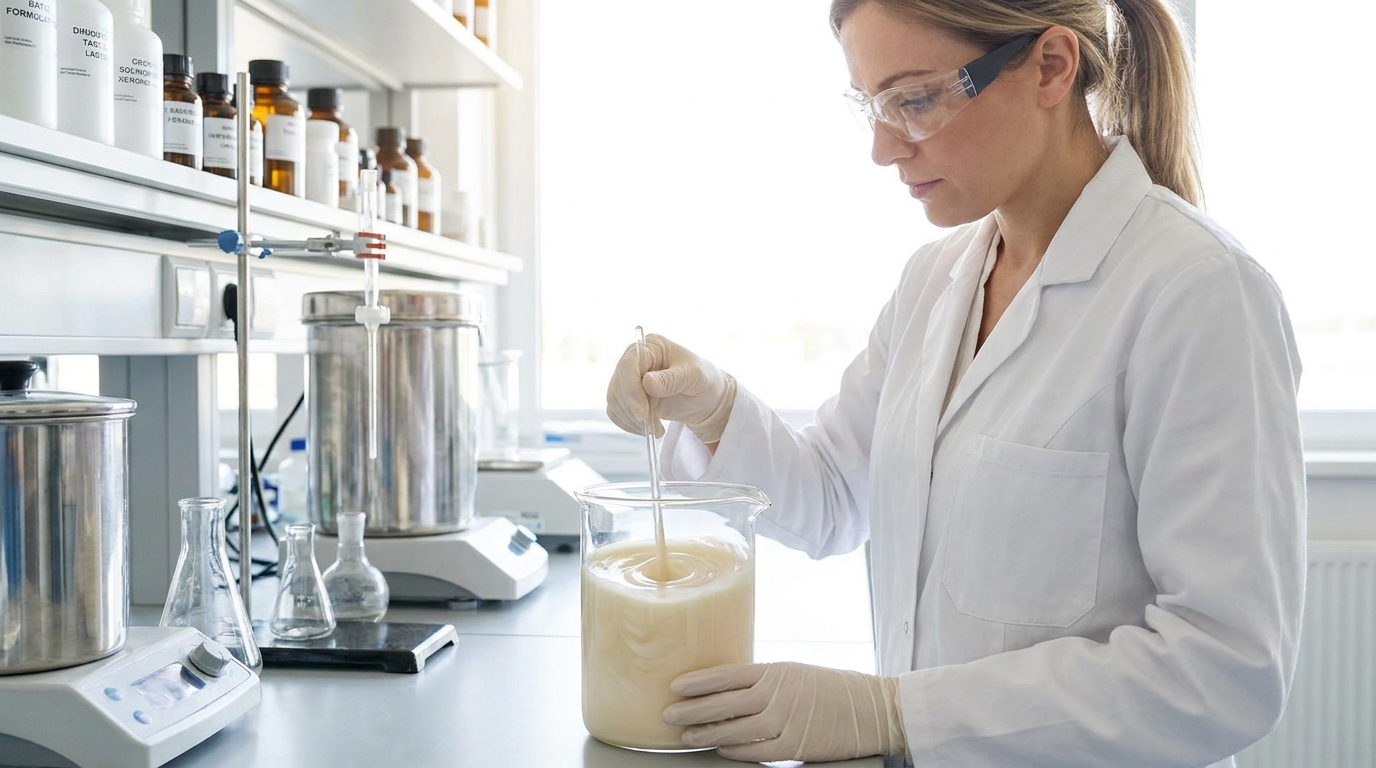
Securing custom solutions and pure raw materials sets a strong foundation. However, you still have to blend these potent compounds successfully. Formulators face significant hurdles when mixing volatile ingredients. You must balance stability, optimize pH levels, and ensure the final product feels luxurious. Let us explore proven best practices for mastering ingredient selection for anti-aging formulations and solving common lab challenges.
Stability and Oxidation
As we covered earlier, volatile actives degrade quickly under light and air exposure. Retinol and L-Ascorbic Acid present the biggest stability headaches. You must protect these compounds to ensure a long shelf life.
Encapsulation technology works best for retinoids. It shields the active molecule until it touches the skin. This slow-release mechanism also reduces initial surface redness. Meanwhile, Vitamin C oxidation turns clear serums brown or orange. You stop this rapid degradation by adding chelating agents like EDTA. These agents bind to stray metal ions in your water supply. They prevent those ions from destroying your delicate antioxidants. Using airless pump packaging further protects these sensitive formulas from oxygen damage.
pH Optimization
Your formula’s pH dictates whether an active ingredient actually penetrates the skin. If the pH is wrong, even premium components fail completely. We know L-Ascorbic Acid requires a pH below 3.5 to work. Similarly, chemical exfoliants demand strict acidic environments. Glycolic and lactic acids perform optimally between a pH of 3.0 and 4.0.
However, highly acidic products easily irritate mature skin. You must balance efficacy against daily comfort. Formulators often add soothing botanicals or hydrating humectants to buffer these strong acids. Working alongside an experienced partner like Jiangsu Holly Uwill International Trade Co., Ltd. helps you source stable, natural moisturizers. Our ISO and FDA-certified facilities provide pure ingredients maintaining optimal pH levels while protecting skin comfort.
Synergy vs. Antagonism
Smart ingredient selection for anti-aging formulations relies heavily on synergy. Some compounds work beautifully together. Others cancel each other out or cause severe irritation.
Combining Vitamin C, Vitamin E, and Ferulic Acid creates powerful synergy. This specific trio stabilizes the formula and doubles its photoprotection. Niacinamide paired alongside retinol offers another excellent combination. Niacinamide strengthens the skin barrier directly. This stabilization drastically reduces typical retinol irritation.
Conversely, you must avoid antagonistic pairings entirely. Layering strong AHAs directly over retinol often leads to over-exfoliation and a damaged barrier. Keep these active categories in separate products. Recommend users apply Vitamin C in the morning and retinoids at night.
| Ingredient Combination | Interaction Type | Formulation Result |
|---|---|---|
| Vitamin C + Vitamin E + Ferulic Acid | Synergy | Doubles UV protection and stabilizes the serum. |
| Retinol + Niacinamide | Synergy | Reduces irritation while boosting collagen. |
| Retinol + Glycolic Acid (AHA) | Antagonism | Causes severe irritation and barrier damage. |
Texture and Absorption
A product can have perfect clinical data and still fail if it feels sticky. Consumers demand a luxurious sensory experience. Formulating for ideal texture ensures serums and creams absorb beautifully.
Always follow the thinnest to thickest rule. Design water-based serums to penetrate instantly. Use low molecular weight hyaluronic acid to drive moisture deep into the epidermis. Follow these thin serums using richer creams. You need strong emollients and occlusives to seal everything inside.
If you formulate a heavy retinol cream, consider the “sandwich method.” Design the product so users can apply a light moisturizer first, then the retinol, followed by a thicker cream. This technique mitigates irritation while locking in hydration. Finally, using multifunctional ingredients like pentylene glycol improves both texture and active delivery. It leaves a silky finish without any heavy residue.
Conclusion
Selecting precise anti-aging ingredients guarantees your skincare product succeeds. Blending advanced science with natural extracts builds ethical brands. Partner with Jiangsu Holly Uwill International Trade Co., Ltd. for your next formulation project. We offer thirty years of certified cosmetic manufacturing expertise.
- Evaluate your current ingredient list for maximum skin benefits.
- Request samples of our premium cosmetic active raw materials.
- Schedule a quick consultation for customized formulation solutions today.
Frequently Asked Questions About Ingredient Selection for Anti-Aging Formulations
Can I use retinol and alpha hydroxy acids together?
Using them at the same time is usually a bad idea. These strong ingredients can easily over-exfoliate your skin. This leads to redness, peeling, and a damaged skin barrier. Instead, try alternating them on different nights. You can also use vitamin C in the morning and retinol at night. Applying moisturizer before and after retinol helps prevent irritation. This simple trick is called the sandwich method.
What is the best alternative to retinol for sensitive skin?
Bakuchiol is an excellent choice for highly sensitive skin types. It provides similar collagen-boosting benefits without the harsh side effects. You will not experience the typical redness or peeling associated with vitamin A. Also, consider using derivatives like magnesium ascorbyl phosphate. They are much gentler than pure L-ascorbic acid. For custom formulation solutions, Jiangsu Holly Uwill offers high-quality, soothing moisturizers. We help brands create gentle products for delicate skin.
How can I stop my Vitamin C serum from turning brown?
Vitamin C is very unstable and oxidizes when exposed to light. Once it turns brown, it loses its antioxidant power. Always store your serum in a cool, dark place. Look for products packaged in dark or opaque airless pump bottles. Formulations with added vitamin E and ferulic acid last longer. These extra ingredients double the sun protection and stabilize the mixture. Chelating agents also prevent metal ions from ruining the formula.
Why does hyaluronic acid come in different molecular weights?
Different weights target various layers of your skin tissue. Low molecular weight hyaluronic acid penetrates deeply into the skin. It helps plump the tissue from the inside out. High molecular weight hyaluronic acid stays on the surface. It forms a protective film to lock in precious moisture. Using a blend of both weights gives the best hydrating results. Jiangsu Holly Uwill supplies premium moisturizers for these advanced formulations.
How long does it take to see anti-aging results?
Your skin needs about 28 to 40 days to renew itself. Because of this, quick fixes rarely provide lasting anti-aging benefits. You must use active ingredients consistently for several months. Retinoids and peptides usually take 12 to 24 weeks to work. You will slowly notice improvements in fine lines and skin texture. Patience is truly the most important part of any skincare routine. Stick with your regimen to see the best possible outcome.
- Identify your primary skin aging concerns before selecting active ingredients.
- Source your raw materials from certified suppliers like Jiangsu Holly Uwill.
- Store unstable antioxidants in opaque containers away from direct sunlight.
- Test new potent actives on a small patch of skin first.
- Apply a broad-spectrum sunscreen daily to block harmful UV rays.
Creating effective anti-aging products requires choosing the right active ingredients. Formulators must balance powerful compounds like retinol with soothing moisturizers. Understanding molecular weights and pH levels ensures maximum skin penetration. Partnering with experienced suppliers like Jiangsu Holly Uwill guarantees high-quality materials. By combining science-backed ingredients and proper packaging, brands deliver visible results. Always prioritize skin barrier health to prevent unwanted irritation.
 English
  Russian
  Spanish
  Japanese
  Korean
  Arabic