
.png)
.png)
.png)
The clean beauty market will hit $15.3 billion by 2028.
Today’s consumers demand completely safe and sustainable cosmetic formulas. Brands must adapt quickly to survive.
In this post, you will learn the clean beauty formulation trends every manufacturer should know.
Understanding the Shift Toward Clean Cosmetic Formulation

You already know the market is booming. But what drives this massive growth? Consumers no longer accept vague marketing claims. They demand formulas built on transparency, safety, and real science. Let’s break down what this shift means for your production lines.
Defining the Modern Standard
For manufacturers, a Clean cosmetic formulation goes far beyond printing “chemical-free” on a label. In fact, “chemical-free” is a complete myth. Everything is a chemical. Instead, clean beauty focuses on non-toxic, “free-from” formulas prioritizing human health. It allows safe, nature-identical synthetics alongside plant-based extracts.
You must balance efficacy and safety. For over 30 years, Jiangsu Holly Uwill International Trade Co., Ltd. has helped manufacturers navigate this exact balance. We supply high-quality natural preservatives and moisturizers meeting strict international standards. This ensures your formulas remain stable without compromising safety.
The Rise of “Cleanical” Beauty
Ten years ago, a simple botanical extract sold a product. This is no longer true. The industry has evolved from basic natural claims to scientifically backed Green beauty products. Consumers want clinical-grade performance merged into clean ingredient lists.
We call this the “cleanical” movement. Manufacturers now utilize biotech-derived actives and bio-fermentation. This shift solves a major supply chain pain point. Lab-grown ingredients offer better consistency than wild-harvested crops. They also protect fragile natural resources.
Total Transparency and Safety
Shoppers read INCI lists actively. They demand complete transparency. They look for certifications like EWG Verified or Sephora Clean. This forces brands to prioritize strict cosmetic ingredient safety.
- Fragrance Disclosure: You cannot hide behind generic terms like “Parfum” to conceal phthalates.
- Essential Oil Limits: Keep essential oils in leave-on products below 1% to minimize sensitization risks.
- Ingredient Tracing: Source materials ethically to avoid greenwashing litigation.
Global Regulatory Changes
Regulations are finally catching up to consumer demands. The regulatory landscape shows a massive global disparity. You must adapt quickly to stay compliant across different markets.
| Region | Banned/Restricted Ingredients | Recent Regulatory Updates |
|---|---|---|
| European Union (EU) | Over 1,600 ingredients | Strict REACH compliance required for all chemical substances. |
| United States (US) | Historically 11 ingredients | MoCRA enforces strict safety substantiation and adverse event reporting. |
The Modernization of Cosmetics Regulation Act (MoCRA) expands US oversight significantly. Manufacturers must now report serious adverse events within 15 business days. You must also maintain strict safety substantiation for every product. Complying strictly to these global standards is non-negotiable. Our ISO and FDA-approved production facilities ensure the raw materials we provide keep you fully compliant.
Top Clean Beauty Formulation Trends Every Manufacturer Should Know
Complying with strict global safety regulations is just your baseline. To capture a share of the projected $15.3 billion market, you must formulate ahead of the curve. Let’s explore the top formulation trends driving consumer purchases today.
1. The Dominance of Natural Extracts
Consumers actively seek plant-based extracts and vegan certifications. The demand for Natural cosmetic ingredients dominates the current market. However, you must avoid the greasiness often associated with natural oils. Try replacing synthetic silicones like Dimethicone with plant-derived alternatives. Ingredients like Hemisqualane or Coco-Caprylate provide excellent slip and spreadability.
At Jiangsu Holly Uwill International Trade Co., Ltd., we specialize in manufacturing high-quality moisturizers and natural extracts. Our 30 years of experience ensures these materials meet strict ISO standards. We help you achieve superior sensory profiles while keeping your supply chain highly cost-effective.
2. The Rise of Functional Formulations
As we covered earlier with the “cleanical” movement, shoppers expect real results. They want multi-tasking products. This drives the rapid rise of functional components. Think barrier repair combined with deep hydration. For example, formulators now use Bakuchiol as a clean alternative to retinol. It stimulates collagen production without causing irritation or UV sensitivity.
3. Waterless and Concentrated Products
Water scarcity forces brands to rethink traditional formulas. Anhydrous, or waterless, products represent a massive shift. A concentrated Personal care formulation can reduce product weight by 70% to 90%. This drastically lowers your shipping emissions.
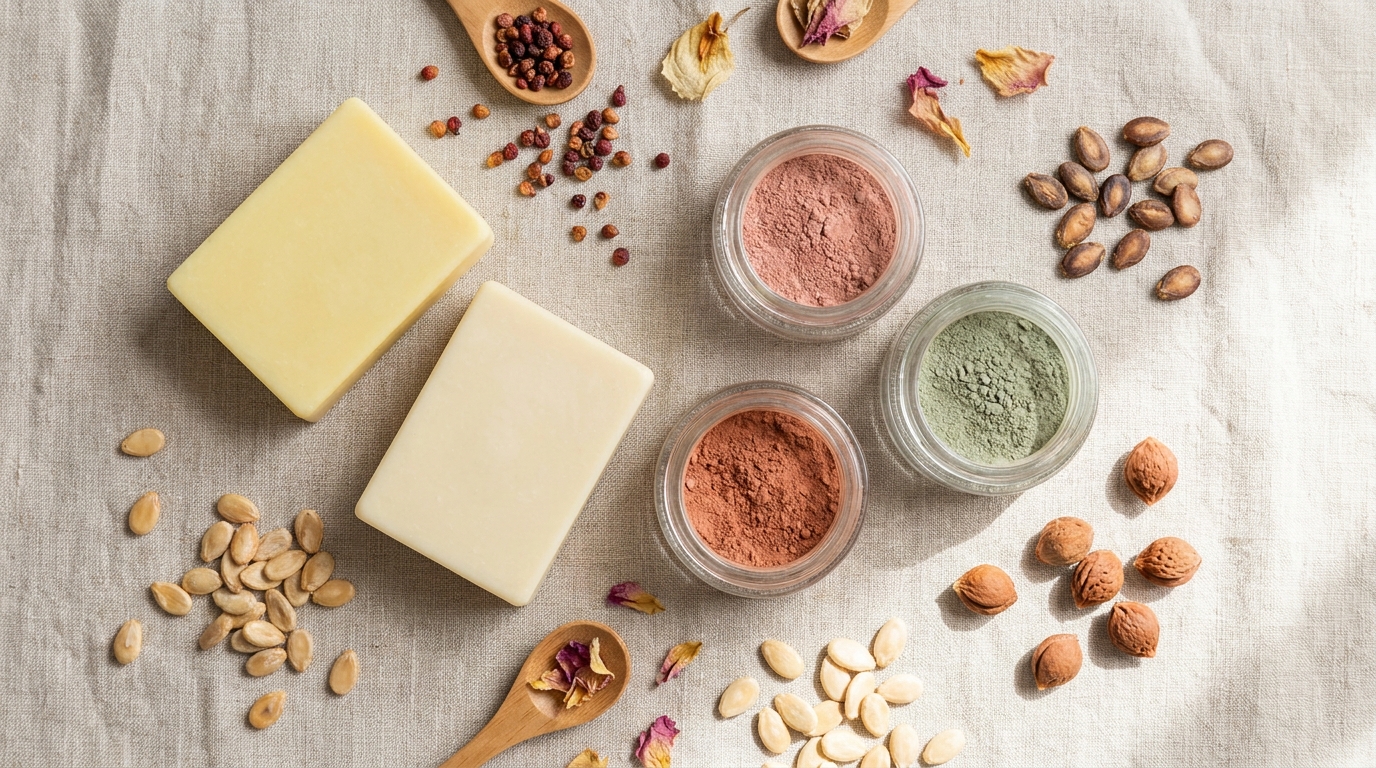
Going waterless also eliminates the need for traditional aqueous preservatives. You can develop powders, solid bars, and concentrated oils. This smart approach solves both environmental and preservation challenges simultaneously.
4. Upcycled and Sustainable Sourcing
Circular beauty is rapidly reshaping supply chains. Brands now utilize food industry byproducts to create high-value active compounds. You might extract antioxidants from discarded coffee grounds or citrus peels.
- Fruit Seeds: Upcycled raspberry seed oil from the juice industry acts as a potent UV-absorber.
- Cost Management: Sourcing these sustainable materials helps offset the 20% to 40% higher costs typically associated with certified organic raw materials.
- Biodegradability: You must ensure these materials achieve 60% to 70% degradation within 28 days to meet standard OECD 301 guidelines.
5. Hyper-Focus on the Skin Microbiome
Consumers want products that protect their skin barrier. They actively look for microbiome-friendly claims. You must formulate at a skin-neutral pH between 4.5 and 5.5. Avoid harsh surfactants that strip the skin.
Instead, prioritize gentle components that prevent irritation. We recommend using chelating agents like Sodium Phytate. These boost the performance of natural preservatives without disrupting the delicate skin microbiome.
| Traditional Approach | Clean Beauty Alternative | Primary Benefit |
|---|---|---|
| Synthetic Silicones (Dimethicone) | Plant-derived Hemisqualane | Improved biodegradability and natural slip |
| Water-heavy Emulsions | Anhydrous Powders and Bars | 70-90% reduced shipping weight |
| Synthetic Retinol | Bakuchiol | Similar efficacy with much lower irritation risk |
| Virgin Raw Materials | Upcycled Fruit Seeds and Peels | Supports circular economy and sustainability |
The Move Towards Preservative-Free Cosmetics and Natural Alternatives
We just explored how chelating agents protect the delicate skin microbiome. This hyper-focus on skin health naturally leads to another major shift. Consumers are aggressively rejecting traditional synthetic preservatives. They actively scan labels to avoid parabens and formaldehyde releasers.
Shoppers associate these legacy chemicals with irritation and toxicity. They demand “free-from” labels. You cannot ignore this demand. However, removing traditional synthetics creates a massive formulation hurdle. You must keep products safe from mold and harmful bacteria. A typical clean beauty product targets a 12 to 18-month shelf life. Conventional items easily last three years. This shorter window requires much smarter preservation strategies.
Challenges and Packaging Innovations
Formulating Preservative-free cosmetics introduces serious stability challenges. Every formula must still pass the rigorous USP <51> Antimicrobial Effectiveness Test. You simply cannot compromise on consumer safety.
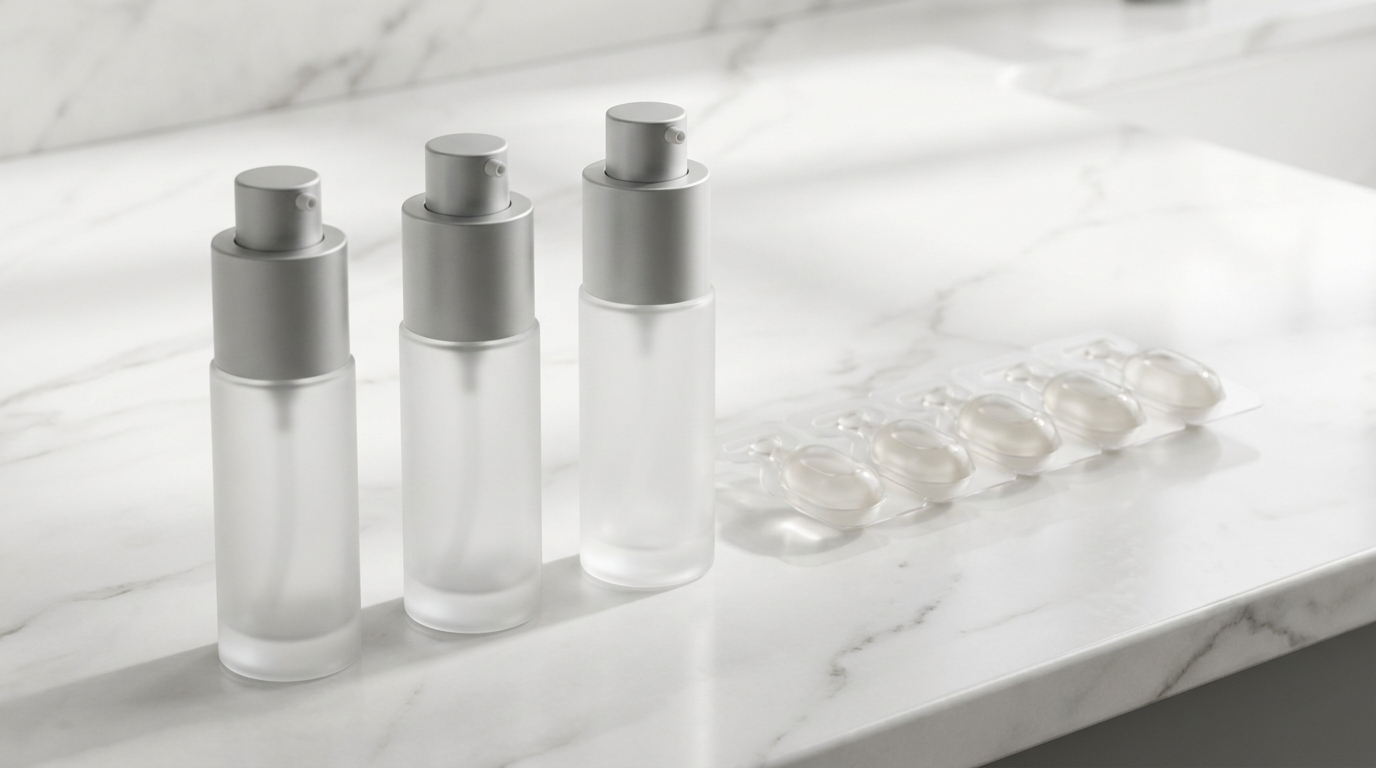
To achieve this, brands rely heavily on packaging innovations. You must prevent air and moisture from entering the product entirely.
- Airless Pumps: These block oxygen exposure. They also prevent contamination from dirty fingers.
- Single-Use Pods: Encapsulated doses eliminate the need for broad-spectrum antimicrobials.
- Refillable Cartridges: These pair perfectly with anhydrous formulas to keep external moisture out.
Leveraging High-Quality Natural Preservatives
Sometimes, entirely preservative-free packaging is not feasible for your product line. In these cases, you must pivot to natural alternatives. Formulators now use organic acids, glycols, and bio-fermentation systems. These plant-derived antimicrobial agents keep formulas safe while maintaining strict clean claims.
Sourcing these Eco-friendly cosmetic ingredients requires a highly reliable partner. Natural botanical extracts often suffer from seasonal inconsistency. You need standardized, high-quality inputs to prevent batch failures.
For over 30 years, Jiangsu Holly Uwill International Trade Co., Ltd. has manufactured premium natural preservatives and flavor enhancers. Our state-of-the-art facilities in China and overseas guarantee consistent quality. We hold both ISO and FDA approvals. This ensures your raw materials meet strict international safety standards. We help you maintain product shelf-life while keeping your supply chain highly cost-effective.
| Preservation Factor | Traditional Approach | Modern Clean Alternative |
|---|---|---|
| Chemical Agents | Parabens, Phenoxyethanol | Fermentation-derived systems, Organic acids |
| Shelf Life Target | 36+ months | 12 to 18 months |
| Packaging Barrier | Standard open jars and tubes | Airless pumps, single-use pods |
| Sensory & Scent | Synthetic fragrances (Parfum) | Natural flavor enhancers and isolates |
Sourcing Sustainable Cosmetic Ingredients and Raw Materials

Maintaining a cost-effective supply chain for preservatives is just the beginning. This same reliability must extend across your entire production line. As consumer demands evolve, shoppers expect total transparency. They want to know exactly where every component comes from. Building an ethical supply chain for all your Cosmetic raw materials is no longer optional. It is absolutely essential for brand survival.
Building Ethical and Transparent Supply Chains
Modern consumers actively investigate ingredient origins. They look for cruelty-free certifications and ethical labor practices. You must ensure your sourcing methods do not harm local ecosystems. Moving away from wild-harvesting protects fragile plant species. Instead, formulators now prefer lab-grown “cleanical” actives or biotech-derived alternatives. These methods provide complete traceability from the lab to the final product.
Balancing Efficacy, Sustainability, and Cost
Brands face a major challenge when upgrading their formulas. You must choose Sustainable cosmetic ingredients without sacrificing product efficacy. You also need to maintain cost-effective pricing. Certified organic or ethically sourced materials often cost 20% to 40% more than traditional synthetics.
How do you absorb these higher costs? You adopt smarter sourcing strategies. Utilizing upcycled food industry byproducts helps offset premium organic prices. Bio-fermentation also offers a highly stable and cost-effective way to produce active compounds at scale.
Leveraging Global Manufacturing Expertise
Finding these high-quality, sustainable inputs requires serious expertise. You need a partner who understands both green chemistry and global logistics. Botanical extracts often suffer from seasonal inconsistencies. This volatility can derail your production schedule quickly.
Jiangsu Holly Uwill International Trade Co., Ltd. brings over 30 years of experience to solve this exact challenge. We operate state-of-the-art production facilities in China and overseas. This global footprint allows us to manufacture premium natural extracts, moisturizers, and flavor enhancers efficiently.
Our efficient supply chain management helps you meet diverse market demands seamlessly. We ensure every batch meets strict ISO and FDA standards. This guarantees your formulas remain safe, stable, and highly effective. We deliver top-tier quality while keeping your pricing highly competitive.
| Sourcing Challenge | Traditional Approach | Modern Sustainable Solution |
|---|---|---|
| Material Cost | Cheap virgin synthetics (petroleum-based) | Upcycled byproducts to offset organic premiums |
| Supply Consistency | Wild-harvested botanicals (high seasonal risk) | Bio-fermentation and standardized lab-grown actives |
| Quality Control | Fragmented brokers with limited oversight | Direct partnership with ISO/FDA approved facilities |
| Environmental Impact | High carbon footprint and resource depletion | Circular economy practices and reduced shipping weights |
Balancing Efficacy with Cosmetic Ingredient Safety
We just discussed building a transparent and cost-effective supply chain. Sourcing sustainable inputs remains crucial for modern brands. However, the best supply chain means nothing if the final product fails to perform. You must deliver real results. Modern consumers refuse to compromise. They want ethical formulas, but they also demand visible clinical effectiveness. Let’s explore how you balance this performance alongside strict safety standards.
Delivering on the “Cleanical” Promise
Shoppers expect clean formulas to rival legacy synthetic brands. You cannot rely on a feel-good eco-story alone. Your products must work. Formulators face a tough balancing act here. You must remove restricted chemicals while maintaining high performance. As we covered earlier, consumers want clinical-grade results from clean labels. This means utilizing highly stable actives.
For example, replacing synthetic silicones requires precise formulation. You must avoid a greasy or tacky sensory experience. Natural alternatives must provide the exact same slip and spreadability. If a clean anti-aging cream feels heavy, consumers will not buy it twice.
Formulating with High-Quality Moisturizers
Achieving this perfect texture requires premium inputs. You need high-quality moisturizers and Clean beauty ingredients meeting strict regulatory demands. Natural oils can oxidize quickly. They often go rancid if formulated incorrectly. You need reliable hydration agents that remain stable over time.
Jiangsu Holly Uwill International Trade Co., Ltd. helps you solve this exact problem. Over our 30-year history, we have specialized in manufacturing premium moisturizers and essential raw materials. We provide inputs that elevate your formula’s efficacy. Our natural ingredients ensure your products feel luxurious while adhering to strict global safety protocols.
The Critical Role of International Certifications
How do you prove your formulas are actually safe? You rely on verified certifications. Global consumers look for clear trust signals. They want absolute assurance regarding Cosmetic ingredient safety. You must guarantee every product adheres to international environmental and health standards.
You cannot achieve this without a certified manufacturing partner. Our state-of-the-art production facilities hold both ISO and FDA approvals. This reflects our deep dedication to maintaining the highest quality standards. When you source raw materials from us, you inherit this compliance. It drastically reduces your regulatory risk across diverse global markets.
Rigorous Stability and Safety Testing
New clean formulations require intense testing. Natural botanical extracts behave differently than standard synthetics. They often present unique stability issues. You must prevent emulsion separation without using traditional synthetic emulsifiers.
You also need to test for sensitization risks constantly. Remember the 1% concentration limit on essential oils we discussed earlier? You must verify this safety through clinical patch testing. Every batch must undergo rigorous checks before hitting the market. You cannot skip these steps when formulating clean products.
| Testing Parameter | Clean Beauty Focus | Traditional Focus |
|---|---|---|
| Emulsion Stability | Natural emulsifier performance over time | Synthetic polymer stability |
| Oxidation Risk | High (requires natural antioxidants) | Low (uses synthetic stabilizers like BHT) |
| Sensitization | Strict essential oil limits (under 1%) | General synthetic fragrance tolerance |
| Facility Certification | ISO, FDA, and ethical sourcing approvals | Basic regulatory minimums |
Conclusion
Adapting to clean beauty formulation trends ensures lasting market success. Green beauty standards will keep evolving rapidly. You need premium natural materials to build safe product lines. Partner with Jiangsu Holly Uwill International Trade Co., Ltd. We provide over thirty years of certified ingredient expertise.
- Review your current formulas for synthetic preservatives.
- Request natural ingredient samples from our team today.
- Update your supply chain using our cost-effective solutions.
Frequently Asked Questions About Clean Beauty Formulation Trends
Is clean beauty exactly the same as natural beauty?
No, clean beauty is not always just natural. Clean products can safely include synthetic ingredients. The main goal is avoiding harmful toxins. Natural beauty only uses ingredients from nature. Some natural items can actually irritate the skin. Clean beauty focuses on safety, testing, and skin health. Safe synthetics are often used to improve product stability.
How do waterless beauty products help the environment?
Waterless formulas are also called anhydrous products. They remove water to make items much lighter. This reduces shipping weight by up to 90 percent. Lower weight means fewer carbon emissions during transport. Without water, these products also need fewer traditional preservatives. Powders and solid bars are great examples of this trend. They help save precious water resources globally.
Can natural preservative systems actually protect cosmetic formulas?
Yes, natural preservatives can pass strict antimicrobial tests. They just require careful formulation and testing. You can use organic acids or fermentation-derived systems. Adding chelating agents like sodium phytate boosts their power. Jiangsu Holly Uwill International Trade Co., Ltd. excels here. We manufacture high-quality natural preservatives for the cosmetics industry. Our FDA-approved ingredients ensure your clean beauty products stay safe.
What are the best clean alternatives to traditional silicones?
Silicones provide a smooth feel but are not clean. Consumers often dislike the greasy feel of natural oils. Plant-derived ingredients like hemisqualane are perfect replacements. Coco-caprylate is another great option for smooth spreadability. These clean alternatives offer a beautiful sensory experience. They avoid the heavy buildup caused by synthetic dimethicone. You can achieve great texture without compromising clean standards.
How can brands manage the higher costs of clean ingredients?
Clean and organic ingredients often cost 20 to 40 percent more. Partnering with an experienced supplier helps control these expenses. Jiangsu Holly Uwill offers highly cost-effective pricing for manufacturers. Our 30 years of experience ensures efficient supply chain management. We provide premium moisturizers and natural extracts at fair rates. You can maintain high margins while meeting clean beauty standards.
The clean beauty market is growing rapidly. Manufacturers must adapt to new formulation trends and strict regulations. Focus on safe synthetics, sustainable packaging, and natural preservatives. Waterless formulas and upcycled ingredients offer great environmental benefits. Partnering with a reliable supplier ensures cost-effective and compliant production. Embrace these changes to create safe, effective, and popular cosmetic products.
- Audit your current product line for banned or restricted ingredients.
- Source FDA-approved natural preservatives from trusted industry manufacturers.
- Test waterless formats to reduce shipping costs and carbon emissions.
- Update product packaging to include compostable materials or refillable pods.
 Spanish
  English
  Russian
  Japanese
  Korean
  Arabic