
Hair care has evolved into advanced science. Consumers now demand treatments that truly transform their hair.
Functional ingredients actively improve hair health. Choosing premium chemicals ensures safety and builds brand credibility.
In this guide, you will explore essential ingredient categories. We will also discuss finding reliable suppliers.
Understanding the Role of Functional Ingredients in Hair Care

Before exploring specific categories, we must define what makes these components truly functional. Many traditional formulas rely heavily on artificial fragrances or colorants. These aesthetic additives only improve sensory appeal. They do not fix damage or improve scalp health. In contrast, functional ingredients actively alter the physical state of the hair. They provide structural support, moisture retention, and protection. Formulators need high-quality hair care chemical ingredients to achieve these visible results.
Sourcing matters just as much as the formula itself. Choosing an experienced cosmetic raw materials supplier ensures your products perform safely and consistently. For example, Jiangsu Holly Uwill International Trade Co., Ltd. brings over 30 years of industry expertise. Backed by ISO and FDA certifications, they provide sustainable, customized formulation solutions for global brands. This reliability lets you focus on creating highly effective personal care treatments.
The Basic Science of Hair Structure
To formulate functional ingredients for hair care products effectively, you need to know how hair absorbs active components. A single hair fiber consists of 65% to 95% keratin proteins. It also contains 15% to 35% water and up to 9% lipids. The hair shaft features three distinct layers. The outer cuticle acts as a protective shield. The inner cortex provides strength and elasticity. The central medulla sits at the very core.
Ingredient molecular size dictates exactly where it works. Formulators measure this size in Daltons. Active molecules under 500 Daltons easily penetrate the cuticle. They travel deep into the cortex to repair internal damage. Meanwhile, larger molecules over 1000 Daltons act as film-formers. They coat the outer cuticle to lock in moisture and add slip.
| Target Area | Ingredient Molecular Size | Primary Action | Example Ingredients |
|---|---|---|---|
| Inner Cortex | Under 500 Daltons | Deep repair, structural reinforcement, hydration | Hydrolyzed proteins, specific amino acids |
| Outer Cuticle | Over 1000 Daltons | Surface coating, moisture sealing, friction reduction | Large silicones, heavy emollients, polymers |
Meeting Modern Consumer Demands
Today’s buyers expect much more than basic cleansing. They face daily mechanical damage from brushing and styling. Chemical damage from bleaching and perming reduces hair tensile strength by up to 50%. Environmental stress like UV rays and pollution also weakens hair fibers over time. Consumers want targeted solutions that address these specific pain points directly.
The “skinification” of hair care heavily drives this shift. Consumers now treat scalp care as an extension of skincare. They look for formulas offering deep hydration, sebum regulation, and microbiome balance. They also demand advanced bond-building technology to repair broken disulfide bridges. Fulfilling these modern needs requires precise, high-performance ingredients tailored for distinct textures and damage levels.
Essential Categories of Functional Ingredients for Hair Care Products
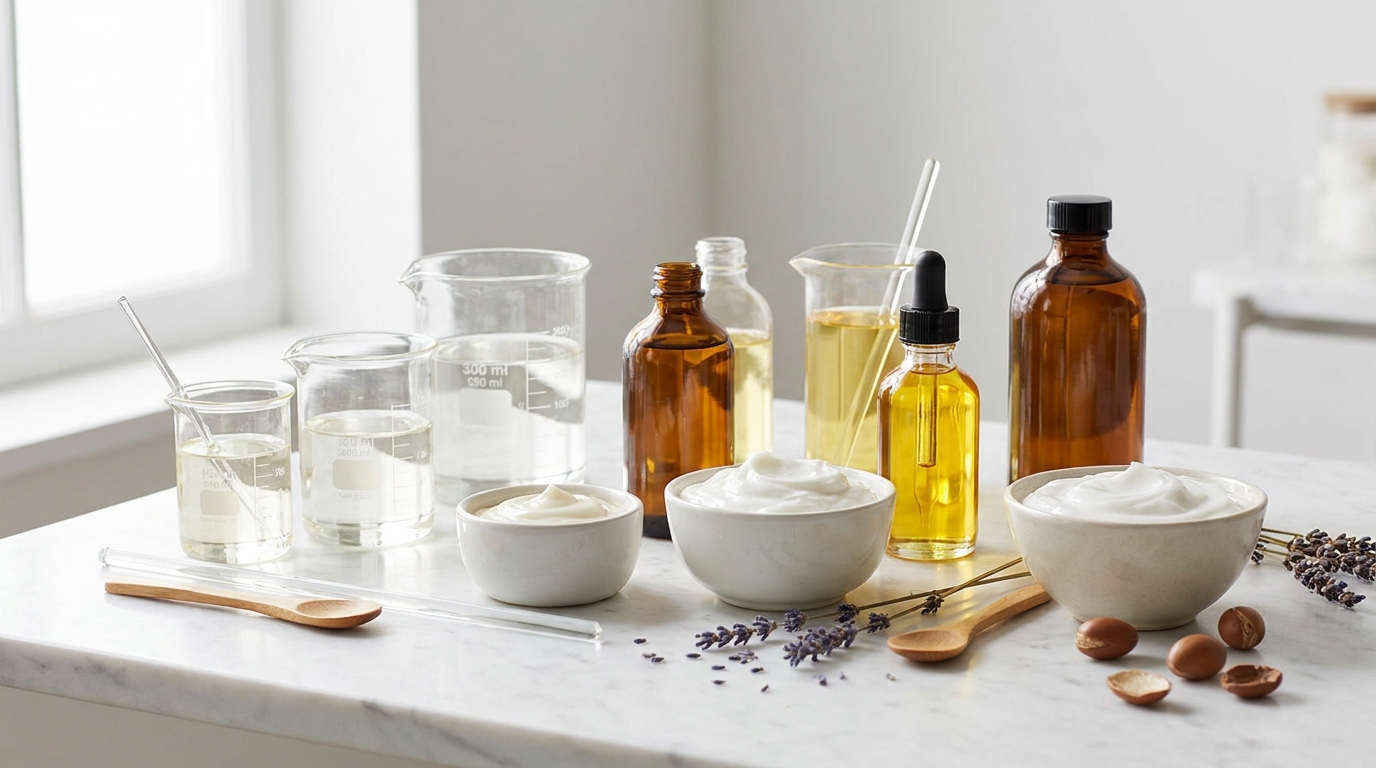
To meet modern consumer demands for targeted repair, you must select the right components. Formulators rely on specific categories of functional ingredients for hair care products to achieve these results. Let us explore the core groups driving these advanced formulas today.
Cleansing Agents and Surfactants
Surfactants form the foundation of any cleansing product. They remove dirt, excess sebum, and stubborn product buildup. A well-formulated cleanser relies on a strategic blend of different agents:
- Primary Surfactants: Deliver the main foaming and deep cleansing action.
- Secondary Surfactants: Stabilize foam and reduce potential skin irritation.
- Chelating Agents: Prevent mineral buildup from hard water environments.
Standard shampoos typically contain 10% to 20% active surfactant matter. Gentle or “low-poo” cleansers use a lower range of 5% to 10%. You must balance strong cleansing power against non-stripping properties. Harsh sulfates can swell the cuticle and irritate the scalp. To ensure consistent quality and mildness, always source these primary cleansers from a trusted wholesale hair care raw materials provider.
Conditioning Agents and Emollients
After cleansing, hair requires immediate moisture and protection. Conditioning agents and emollients restore softness, add shine, and make detangling easy. Cationic surfactants, like Behentrimonium Chloride, carry a positive charge. They naturally bind to the negatively charged damaged areas of the hair fiber. Formulators typically use them at 0.5% to 3% in rinse-off products. Always remember the “3-Minute Rule.” These actives need at least three minutes of contact time to properly adsorb.
Silicones like dimethicone provide excellent slip and thermal protection. You will often see them used at 1% to 5% concentrations. However, many consumers now prefer natural plant oils. Coconut oil physically penetrates the hair shaft to reduce protein loss. Other options like sunflower oil primarily coat the surface. Achieving the perfect texture requires the right base. Partnering with a specialized hair conditioning solvent supplier helps you optimize spreadability and performance.
| Ingredient Category | Typical Usage Rate | Primary Function |
|---|---|---|
| Standard Surfactants | 10% – 20% | Deep cleansing and heavy buildup removal |
| Low-poo Surfactants | 5% – 10% | Gentle cleansing for dry or curly hair |
| Cationic Conditioners | 0.5% – 3.0% | Detangling and targeted cuticle repair |
| Panthenol (Vitamin B5) | 0.5% – 1.0% | Moisture retention and elasticity enhancement |
| Salicylic Acid | Up to 2.0% | Scalp exfoliation and sebum regulation |
Moisturizers and Humectants
Hydration is distinctly different from conditioning. Moisturizers and humectants draw moisture from the surrounding environment directly into the hair fiber. Key hydrating ingredients include glycerin, hyaluronic acid, and panthenol. Panthenol works exceptionally well at 0.5% to 1.0% concentrations. It improves moisture retention and enhances elasticity.
You must balance moisture alongside protein in your formulas. Proteins provide rigid structure. Humectants deliver flexibility and softness. Too much protein without adequate hydration makes hair brittle. When scaling up production, procuring reliable bulk personal care ingredients guarantees your formulas remain stable across large manufacturing batches.
Scalp Health and Active Treatments
As we covered earlier, consumers treat their scalps just like facial skin. This trend demands active treatments targeting the root. A healthy scalp maintains a natural pH of around 5.5. Formulators use exfoliants like salicylic acid at up to 2%. This clears dandruff and regulates sebum production effectively.
Stimulating blood circulation also supports healthy follicles. Improved blood flow delivers essential nutrients directly to the hair roots. You can achieve this by incorporating innovative actives like the scalp warming agent vanillyl butyl ether. It provides a gentle, soothing warmth. This unique sensation promotes scalp vitality without causing redness or irritation.
Preservatives and Stabilizers
Even the best functional ingredients for hair care products fail without proper stabilization. Preservatives ensure product safety. They prevent harmful microbial growth from ruining the formula. They also extend shelf life and maintain structural integrity over time.
Modern buyers actively avoid harsh synthetic chemicals. They prefer clean beauty solutions. This shift drives massive demand for natural preservatives and antioxidants. Jiangsu Holly Uwill International Trade Co., Ltd. specializes in manufacturing these essential raw materials. Backed by ISO and FDA certifications, they provide high-quality natural preservatives and moisturizers. Their 30 years of experience helps brands create safe, ethical, and sustainable formulas.
Formulating with High-Quality Hair Care Chemical Ingredients

We just explored how natural preservatives keep your formulas safe and stable. Now, you must combine these components into a finished product. Formulating functional ingredients for hair care products requires intense precision. You need to balance visible results, consumer safety, and sensory appeal. A great shampoo must clean effectively. It also needs a rich lather and a pleasant texture.
Modern consumers demand immediate, visible results from their routines. They also care deeply about how a product feels. Texture and lather drive repeat purchases. You achieve this balance by carefully selecting rheology modifiers and mild cleansers. These raw materials create thick, luxurious textures while maintaining safety. Working alongside an experienced hair care ingredients manufacturer like Jiangsu Holly Uwill ensures you get consistent, high-purity inputs. Their ISO and FDA-certified facilities provide the reliable base needed for successful formulations. This consistency helps you deliver a safe, sensory-rich experience every time.
Synergy and Compatibility in Your Formula
Individual ingredients rarely work alone in a complex formula. They interact constantly within the bottle. You must understand how different active categories complement each other. For example, combining cationic conditioners alongside anionic surfactants often causes problems. They can bind together and form an insoluble complex. This ruins the texture and reduces efficacy.
Instead, you should look for positive synergy. Pairing humectants like glycerin alongside film-formers creates a powerful moisture barrier. You can also use advanced delivery systems. Encapsulation techniques like liposomes protect sensitive actives. They release these beneficial compounds slowly over time. This targeted delivery maximizes the performance of your chosen bio-actives.
Overcoming Common Formulation Challenges
Even the best concepts face technical hurdles during production. Phase separation is a very frequent issue. This happens when oil and water components split apart. You prevent this by choosing proper emulsifiers and stabilizing agents. Cold-process emulsifiers offer a highly sustainable solution here. They save energy while maintaining strong emulsion stability.
Ingredient instability also ruins otherwise good products. Some botanical extracts degrade quickly when exposed to light or air. Adding robust antioxidants protects these fragile compounds from oxidation.
Finally, pH imbalance directly harms the hair fiber. As we covered earlier, the natural scalp pH sits around 5.5. The hair shaft itself is more acidic at roughly 3.67. If your product pH drifts too high, it swells the cuticle. This creates unwanted frizz and friction. Formulators target a final pH between 3.5 and 5.0 for most conditioners. This specific range keeps the cuticle flat and smooth.
| Formulation Challenge | Common Cause | Practical Solution |
|---|---|---|
| Phase Separation | Weak emulsifier system or temperature shifts | Adjust HLB values or incorporate rheology modifiers |
| pH Drift | Lack of proper buffering agents | Incorporate citric acid or sodium citrate |
| Poor Lather | Hard water mineral interference | Add chelating agents like sodium phytate |
| Active Degradation | Oxidation or UV light exposure | Use encapsulated delivery systems and antioxidants |
How to Choose the Right Hair Care Ingredients Manufacturer
We just discussed overcoming technical hurdles like phase separation and pH drift. Solving these issues starts long before you mix your first batch. It begins directly in your supply chain. The success of your personal care brand relies heavily on your partners. A brilliant formula fails if the raw materials are inconsistent or impure. Sourcing premium functional ingredients for hair care products ensures consistent performance.
Key Criteria for Evaluating a Supplier
You need a manufacturing partner you can trust completely. Look for a company possessing over 30 years of industry experience. A proven track record in global markets shows they understand diverse needs. Experienced suppliers anticipate manufacturing issues before they ever happen. They help you scale up production smoothly.
| Evaluation Criteria | Why It Matters for Your Brand |
|---|---|
| 30+ Years Experience | Ensures deep industry knowledge and reliable global market performance. |
| ISO and FDA Certifications | Guarantees strict quality control and safe, state-of-the-art facilities. |
| Ethical Sourcing | Meets modern consumer demands for sustainable and eco-friendly products. |
| Customized Solutions | Allows precise formulation adjustments tailored to specific brand requirements. |
Strict Quality Control and Certifications
Strict quality control remains absolutely non-negotiable. You must ensure the manufacturer holds ISO and FDA certifications. These credentials guarantee they operate state-of-the-art facilities. Rigorous testing prevents contamination and ensures active compounds remain highly stable. Jiangsu Holly Uwill International Trade Co., Ltd. applies these high standards daily. Their certified processes deliver safe chemical ingredients for global cosmetic brands. Purchasing bulk personal care ingredients from a certified facility eliminates guesswork. It keeps your production line moving efficiently and safely.
Sustainable Sourcing and Customized Solutions
Modern consumers demand total brand transparency. They want to know exactly where their products come from. You should seek a partner offering sustainable and ethical sourcing. This strong commitment protects the environment and boosts your brand reputation. Standard off-the-shelf components rarely fit a unique product vision. You need customized formulation solutions tailored to your specific cosmetic needs. Finding a reliable hair conditioning solvent supplier requires careful vetting. Customized support helps your final product stand out on crowded shelves. Jiangsu Holly Uwill excels in providing these tailored, sustainable options. They give formulators the exact tools needed to create innovative treatments.
Future Trends in Wholesale Hair Care Raw Materials

As we covered earlier, sourcing from an ethical, certified partner sets the foundation for your brand. You need customized solutions to stand out on crowded shelves. The personal care industry moves incredibly fast. Staying competitive means anticipating exactly what consumers want next. Today, the demand for advanced functional ingredients for hair care products drives massive market shifts.
The Shift Toward Sustainable and Biodegradable Formulations
Eco-friendly chemistry now dominates modern formulation labs. Buyers actively avoid products harming the environment. They look specifically for biodegradable surfactants. These gentle cleansers wash away safely. They do not pollute local waterways or harm marine life.
Formulators also embrace upcycled ingredients rapidly. They rescue nutrient-rich byproducts from food production. This smart practice reduces global waste significantly. Furthermore, cold-process emulsifiers save massive amounts of manufacturing energy. They maintain strong emulsion stability. They achieve this without requiring the high heat used in traditional mixing phases.
Plant-Based and Natural Alternatives
Traditional synthetic chemicals continue losing ground. Modern buyers prefer clean beauty solutions. They want natural alternatives delivering professional salon results. For instance, many brands now replace heavy synthetic silicones. They use plant-derived options instead. Natural emollients like broccoli seed oil or coco-caprylate provide excellent slip. They avoid the chronic product buildup often associated with dimethicone.
This green shift extends directly to product stabilization. Natural preservatives rapidly replace controversial synthetic options. Jiangsu Holly Uwill specializes in manufacturing these exact natural preservatives and moisturizers. Their ethical solutions keep formulas safe. They help brands meet strict clean beauty standards easily.
Multifunctional Ingredients for Cosmetic and Therapeutic Benefits
Consumers expect much more value from every single bottle. They want ingredients offering both cosmetic beauty and therapeutic health. The ongoing “skinification” of hair care drives this specific trend. People treat scalp care just like facial skincare.
This expectation requires highly advanced active categories. Formulators now blend multiple benefits into single applications:
- Biomimetic Peptides: Repair broken disulfide bridges internally while smoothing the outer cuticle.
- Adaptogens: Protect hair follicles from environmental stress and reduce daily scalp inflammation.
- Microbiome Balancers: Use prebiotics to regulate sebum production and eliminate dandruff naturally.
A single functional ingredient might soothe irritation while simultaneously adding visible volume. This duality makes modern formulations incredibly efficient.
| Ingredient Focus | Traditional Single-Function | Modern Multifunctional Alternative | Combined Benefits |
|---|---|---|---|
| Conditioning | Standard Dimethicone | Argan Oil or Coco-Caprylate | Provides thermal slip and nourishes the lipid layer |
| Scalp Care | Harsh Anti-fungals | Salicylic Acid with Prebiotics | Exfoliates dead skin and feeds healthy scalp bacteria |
| Strengthening | Basic Wheat Protein | Encapsulated Biomimetic Peptides | Coats the surface and repairs deep internal bonds |
Advanced Manufacturing and Customized Formulations
You cannot rely on generic formulas anymore. Global personal care brands require highly customized formulations. Advanced manufacturing processes make these complex blends possible. Precise encapsulation techniques deliver sensitive actives slowly over time. This maximizes performance long after the consumer leaves the shower.
Building these sophisticated treatments requires a world-class facility. Jiangsu Holly Uwill leverages over 30 years of industry experience. They guide brands through these rapid market changes. Their ISO and FDA-certified facilities produce reliable, sustainable raw materials daily. They give you the exact tools needed. You can turn future ingredient trends into highly successful market-ready products today.
Conclusion
Functional ingredients for hair care products drive formulation success. They easily guarantee high consumer satisfaction. Brands must embrace continuous innovation to stay competitive. Partner with Jiangsu Holly Uwill for certified solutions.
- Review your current ingredient list for outdated chemicals.
- Request samples from our FDA-certified manufacturing facilities.
- Test new formulations with our premium moisturizing agents.
Frequently Asked Questions About Functional Ingredients for Hair Care Products
Are silicones actually bad for your hair?
Many people worry about product buildup from heavy silicones. However, not all silicones are bad for your hair. Dimethicone offers great thermal protection and slip. Yet, it can cause buildup over time. You can choose natural alternatives like broccoli seed oil. Water-soluble silicones also rinse out easily. It depends on your hair type and washing routine.
Can functional ingredients permanently repair split ends?
You cannot permanently repair split ends once they happen. Some ingredients can temporarily seal the damaged cuticle. Bond-builders help repair broken disulfide bridges inside the hair. Film-formers coat the surface to make hair look smooth. However, the best cure is always a proper haircut. You should use preventative ingredients to stop future damage.
What is the difference between protein and moisture treatments?
Protein treatments provide essential structure and strength. Ingredients like hydrolyzed wheat protein fix chemical damage. Moisture treatments give your hair elasticity and softness. Humectants like glycerin and hyaluronic acid draw in water. Using too much protein can make your hair brittle. You need a good balance of both for healthy hair.
How can brands ensure the quality of cosmetic ingredients?
Sourcing high-quality raw materials is vital for safe products. You should partner with experienced and certified suppliers. Jiangsu Holly Uwill International Trade Co., Ltd. offers great expertise. We provide ISO and FDA-certified chemical ingredients for cosmetics. Our natural moisturizers and preservatives ensure safe, effective formulations. Ethical sourcing guarantees the best results for your brand.
How often should I use clarifying hair products?
Clarifying shampoos remove hard water minerals and product buildup. You should use them once or twice a month. If you have hard water, chelating agents help greatly. Frequent use of harsh sulfates might dry your scalp. Always follow up with a rich, nourishing conditioner. This restores moisture and keeps your hair very soft.
- Review your current formulations to identify missing functional ingredients.
- Contact Jiangsu Holly Uwill for certified cosmetic raw materials.
- Test ingredient pH levels to ensure optimal scalp health.
- Balance protein and moisture components in your new products.
Choosing the right functional ingredients is vital for effective hair care. Proteins provide strength, while humectants deliver essential moisture. You must balance these elements to avoid hair damage. Using quality raw materials from trusted suppliers ensures safe products. Always consider the scalp microbiome and hair texture during formulation. Proper ingredient selection improves product performance and customer satisfaction.
 Arabic
 English
 Russian
 Spanish
 Japanese
 Korean