| Molecular Formula |
CAS |
EINECS |
| C8H8O3 |
121-33-5 |
204-465-5 |
| Molecular Weight |
FEMA |
JECFA |
| 152.15 |
2461 |
890 |
| Melting Point |
Boiling Point |
Refractive Index at 20°C |
| 81-83°C |
285-287°C |
1.563-1.565 |
| Flash Point |
Density |
Water Solubility |
| 180°C |
1.05 g/cm³ |
Slightly soluble in water |
Appearance and Aroma
-
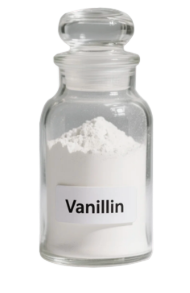
Appearance: White to off-white crystalline powder
-
Aroma: Sweet, creamy vanilla scent, characteristic of vanilla beans
Shelf Life
Under recommended storage conditions and with intact packaging, Vanillin has a shelf life of 24 months.
Content by HPLC (%)
Dosage Recommendation
Vanillin is primarily used as a flavoring and fragrance agent. It is an essential ingredient in the food and beverage, cosmetic, and fragrance industries. Due to its potent aroma, only small amounts are needed in formulations.
-
Food & Beverage: Typically used at concentrations of 0.05% to 0.1% in products like chocolates, ice cream, baked goods, and beverages.
-
Cosmetics & Personal Care: Used at concentrations of 0.1% to 1.0% in fragrances, lotions, soaps, and deodorants.
-
Pharmaceuticals: Employed as a flavoring agent in oral formulations, particularly in syrups or tablets.
Transportation
Vanillin should be handled carefully during transportation to prevent damage to the packaging. The product should be stored away from moisture and direct sunlight, and transported in compliance with local safety regulations.
Storage
Store Vanillin in a cool, dry, and well-ventilated area, away from direct sunlight, heat, and moisture. Ensure the container is sealed to prevent contamination and preserve the product’s quality.
Regulations and Safety
Vanillin is generally recognized as safe (GRAS) for use in food and beverages when used within the recommended concentrations. It is also considered safe for use in cosmetics and personal care products. Always refer to regional regulations (e.g., EU, FDA) for detailed usage guidelines and safety compliance.



 English
  Russian
  Spanish
  Japanese
  Korean
  Arabic